High Pressure, Hard Water & Smart Water Monitors
New home with 90 PSI and hard water? Learn how pressure regulators, smart water monitors, and softeners work together to protect your plumbing.
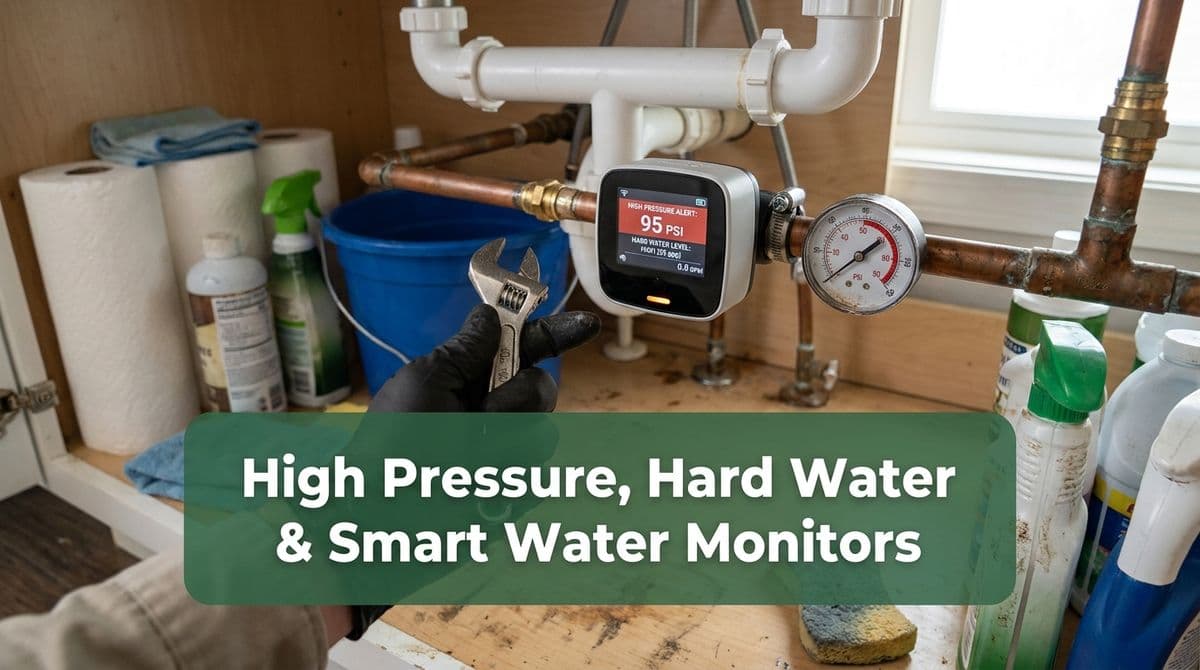
High Water Pressure, Hard Water, and Smart Monitors in One Call
We recently got a call from a new homeowner — let’s call him Mark — who was getting ready to close on a house in a high-pressure area. His home inspector had flagged 90 PSI water pressure, his insurance company was requiring a smart water monitor (a Flo-type device), and he’d just found out the neighborhood was known for very hard water.
Mark’s questions were simple but important:
- Is 90 PSI really that big of a deal?
- Does the pressure need to be fixed before installing a smart monitor?
- What does hard water do to a home’s plumbing?
- Can we handle the monitor, pressure regulator, and softener together?
We walked Mark through all of this on the phone, and we thought it would help other new homeowners in high-pressure, hard-water areas if we shared the same advice here.
Why 90 PSI Water Pressure Is a Problem
When we heard Mark’s inspector measured 90 PSI at the house, we knew we needed to address that right away. For reference, most plumbing codes and manufacturers recommend household water pressure in the 50–75 PSI range, with 60 PSI being a nice sweet spot.
When pressure climbs into the 80–90 PSI range and stays there, homeowners are more likely to see:
- Burst or leaking pipes, especially at weak joints or older copper and galvanized lines
- Premature failure of fixtures like toilets, faucets, and shower valves
- Noisy plumbing (banging or “water hammer” when fixtures shut off)
- Dripping faucets and running toilets because internal parts wear out faster
We told Mark what we tell everyone in his situation: if your pressure is at 90 PSI, we strongly recommend bringing it down with a pressure reducing valve (PRV). It’s not just about comfort; it’s about protecting your whole plumbing system and the devices attached to it.
Smart Water Monitors Work Best with Proper Pressure
Mark’s insurance company wanted a smart water monitor installed — in his case, a Flo-type device that can shut off water automatically if it detects a leak or unusual usage. We install these frequently, and they’re a great layer of protection, especially in high-pressure areas.
Here’s what we explained to him:
- We supply and install the device so both parts and labor are covered under our warranty.
- Consistent pressure helps the monitor do its job better. Very high pressure can exaggerate tiny leaks, cause nuisance alerts, and put more stress on the monitor itself.
- Best practice is PRV + smart monitor together, so the whole system is balanced and protected from day one.
For a typical 3/4" water service with good access, we told Mark he’d be in the ballpark of around what we normally estimate for a PRV and a smart monitor installed together. If the main line is 1" or access is tricky, we plan for a higher price because materials and labor increase.
How We Usually Install PRVs and Smart Monitors
New homeowners often ask where all this equipment actually goes. In most homes, we’re looking for the main water inlet — the point where water first enters the house from the street or well.
Common locations include:
- Near an exterior hose bib close to where the main enters
- Inside a garage or utility room
- In a basement near the front wall of the home
We typically install the PRV first in line, so it brings the pressure down to a safe, adjustable level (often around 60 PSI). Then we install the smart monitor after the PRV, so the device is seeing that stable, reduced pressure. This setup protects both the home and the monitor itself.
Hard Water: The “Hidden” Plumbing Problem
Mark’s new neighborhood also has extremely hard water. For context, the national average is around 5 grains per gallon of hardness. Anything over 10 is considered very hard. We regularly see readings around 30+ grains per gallon in our service area.
Over time, that kind of hardness leads to:
- Scale buildup inside pipes and water heaters
- Clogged aerators on faucets and showerheads
- Shower cartridges and faucet cartridges failing much sooner than they should
- Decreased hot water output as the water heater fills with mineral deposits
We always tell new homeowners in hard water areas: if there isn’t already a water softener, put one on your radar sooner rather than later. It’s one of the best investments you can make to protect your plumbing, water heater, and fixtures.
How to Check Your Water Pressure at Home
While Mark had the inspector’s reading, many homeowners don’t know where their pressure stands. We encourage people to check it themselves between service visits. It’s simple:
- Buy a basic water pressure gauge that screws onto a hose bib (most hardware stores carry them).
- Choose a hose bib close to where the water enters the house.
- Make sure no one is using water inside (dishwasher, washing machine, showers, etc.).
- Screw the gauge on, open the hose bib fully, and read the PSI.
- We like to see readings consistently in the 50–75 PSI range.
If you’re seeing 80 PSI or above, we recommend having a licensed plumber inspect or install a PRV.
Basic Maintenance for PRVs, Softeners, and Smart Monitors
Once we put in the equipment, homeowners often ask what they should do to keep everything working smoothly. Here are simple guidelines we shared with Mark:
- Pressure Reducing Valve (PRV)
Have the pressure checked every year or two. If pressure starts creeping back up, the PRV may need adjustment or replacement. - Water Softener
Keep the salt tank filled to the recommended level, use the type of salt your system specifies, and have the softener serviced every couple of years in very hard water areas. - Smart Water Monitor
Keep the app updated, name your fixtures and zones clearly, and pay attention to alerts. If you get repeated nuisance alerts, we can help fine-tune the settings.
Putting It All Together for New Homeowners
For Mark, our recommendation was straightforward: once he closes on the house, we’ll install a PRV and smart water monitor together at the main, and then plan for a water softener if one isn’t already in place. That combination gives him:
- Safe, consistent water pressure
- Protection against leaks and major water damage
- Longer life from his water heater, faucets, and fixtures
If you’re buying a home in a high-pressure, hard-water area and your inspector or insurance is raising the same flags, we’re happy to walk through your options, just like we did with Mark. A little planning before or right after closing can prevent a lot of headaches — and expensive surprises — down the road.