Why High Water Pressure Is Risky & How Regulators Help
High water pressure can feel great at the tap but quietly damage pipes, fixtures, and appliances. Learn why PSI matters and how a regulator protects your home.
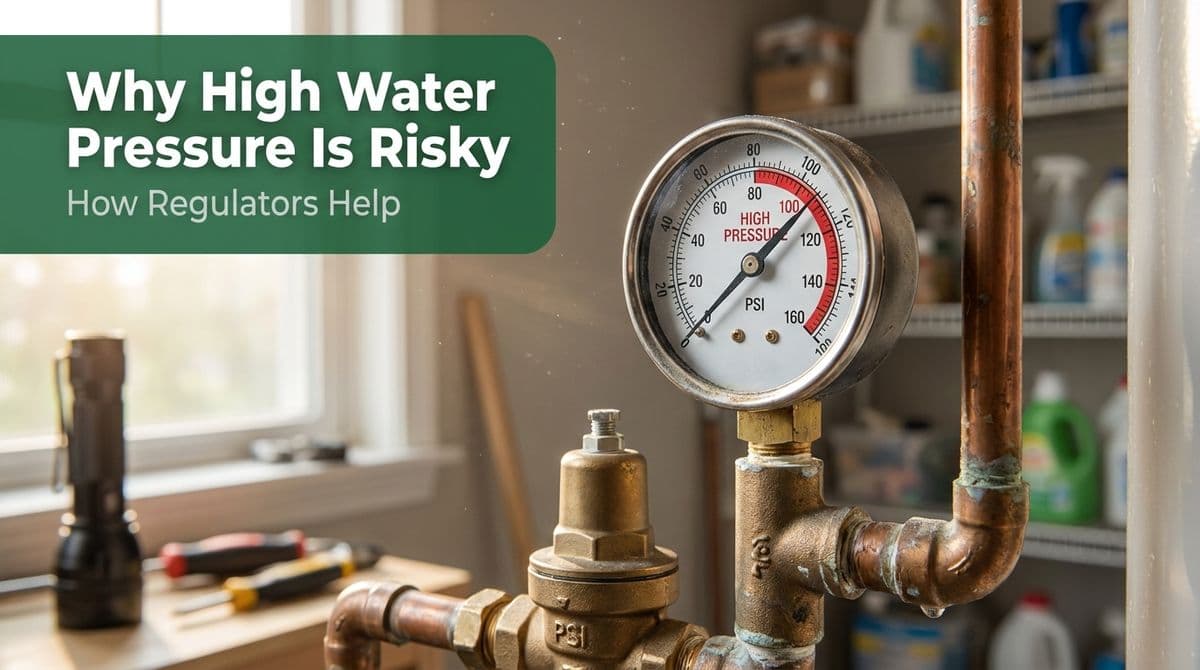
Why We Got Called for a 90 PSI Problem
We recently got a call from a new homeowner — let’s call him Mark — who had just closed on a house and was in that hectic first-week scramble. Cleaners were scheduled, the internet company was coming, and he also needed two plumbing items taken care of: a Moen Flo smart shutoff for his insurance, and a water pressure regulator.
During the inspection, the water pressure at his home had tested at around 90 PSI. Mark remembered us mentioning it was “pretty high,” but he wasn’t sure how serious that really was. His main questions were:
- “Is 90 PSI really that bad?”
- “What can high water pressure actually damage?”
- “How does a pressure regulator protect my house?”
Those are smart questions, and they’re ones we hear a lot — especially from new homeowners. So let’s walk through the same explanation we gave Mark, and break down why your home’s water pressure matters more than you might think.
What Is Normal Water Pressure for a Home?
Your home’s water pressure is usually measured in PSI (pounds per square inch). Most plumbing systems are happiest in the range of about 50–70 PSI. That’s enough to give you a strong shower and fast-filling fixtures without putting your pipes under constant stress.
When we see a home at 80 PSI or higher, we start treating that as more than just “strong pressure” — it’s a potential risk to the plumbing system. Many plumbing codes actually require a pressure reducing valve (PRV) if the incoming pressure is above 80 PSI.
In Mark’s case, the meter was sitting around 90 PSI, which means every pipe, valve, and appliance in his home was being pushed harder than they were designed for.
The Hidden Risks of High Water Pressure
From the outside, high pressure can feel like a nice, powerful shower. Behind the walls, though, it’s a different story. Here’s what we explained to Mark about the damage that 90 PSI can cause over time:
1. Stress on Pipes and Fittings
Every joint, fitting, and connection in your plumbing system is a potential weak point. When pressure is too high, those weak points are under constant strain, which can lead to:
- Leaks at fittings (especially older copper or galvanized connections)
- Pin-hole leaks in copper lines
- Burst pipes in extreme cases or during pressure spikes
These issues often start as tiny, slow leaks behind walls or under floors — the kind you don’t see until they’ve already caused wood rot, mold, or ceiling damage.
2. Damage to Appliances and Fixtures
High PSI is rough on anything that connects to your water line, including:
- Water heaters (shortened lifespan, frequent relief valve discharge)
- Dishwashers and washing machines (blown hoses, internal valve failures)
- Toilets (noisy or constantly running fill valves)
- Faucets and shower valves (dripping, premature wear, noisy operation)
Mark’s insurance company actually required a Moen Flo device and was pushing for proper pressure control precisely because water damage from these failures is one of their biggest claim categories.
3. Noisy Plumbing and Water Hammer
High pressure often goes hand-in-hand with water hammer — that banging or thudding sound when you quickly shut off a faucet or a washing machine valve closes. That noise is shock waves traveling through your pipes, and at 90 PSI, those shock loads are much higher than normal.
How a Pressure Regulator Protects Your Home
Once Mark understood the risks of 90 PSI, his next question was, “So what does the pressure regulator actually do?” We told him to think of a pressure reducing valve (PRV) as a kind of cruise control for his plumbing.
The city or water district might be sending water at 90–120 PSI (and sometimes more, depending on elevation and distance). The PRV is installed on the home’s main water inlet and does three key things:
- Reduces incoming pressure down to a safe level (usually 55–65 PSI)
- Stabilizes fluctuations so your pressure stays consistent even if the street pressure varies
- Protects the entire system — every pipe and fixture downstream of the valve
In Mark’s neighborhood, the main shutoff and water entry were likely under the house, so we planned our work around other trades needing crawlspace access. Once we locate the main line, we install the regulator in an accessible spot so it can be adjusted and serviced in the future.
Signs Your Water Pressure Might Be Too High
You don’t need a pressure gauge to suspect you have a high-PSI problem. We suggested Mark watch for these signs, and they apply to most homes:
- Very forceful faucets or showers that seem “overly strong”
- Toilet fill valves hissing or needing frequent replacement
- Water hammer noises — banging pipes when water shuts off
- Leaky faucets that keep coming back even after repair
- Water heater relief valve occasionally dripping or discharging
The only way to know for sure, though, is to measure your pressure. A simple screw-on gauge from a home store can give you a reading at an outside hose bibb. If you see consistently above 80 PSI, it’s time to call a plumber.
Pressure Regulators and Smart Shutoffs: A Strong Combo
In Mark’s case, the plan was to install both a pressure regulator and his required Moen Flo device. That combination does two big things for his home:
- The pressure regulator controls and tames the force of the water coming in.
- The Moen Flo monitors usage and can shut off water if it detects a major leak.
Together, they dramatically reduce the chance of a sudden plumbing disaster — and that’s why many insurance companies are starting to insist on them.
When to Have Your Water Pressure Checked
If you’ve recently moved into a new home (like Mark), or you’ve noticed any of the symptoms above, it’s a good idea to have your water pressure checked and documented. We can:
- Test and record your current PSI
- Inspect for an existing regulator and verify if it’s working
- Recommend and install a new PRV if needed
- Coordinate with other trades (internet, cleaners, etc.) so we’re not in each other’s way
You only see the convenience of good water pressure. Our job is to make sure you don’t experience the damage that comes from too much of it. If you’re curious about your home’s PSI — or your insurance is asking questions about your plumbing — that’s a great time to bring a pro in for a pressure check and, if needed, a properly installed regulator.