Kitchen Sink Backing Up & Disposal Leaking? Here’s What It Means
Sink backing up and disposal leaking? Learn how to tell if you’ve got a drain problem, a disposal problem, or both — and what you can safely check before calling us.
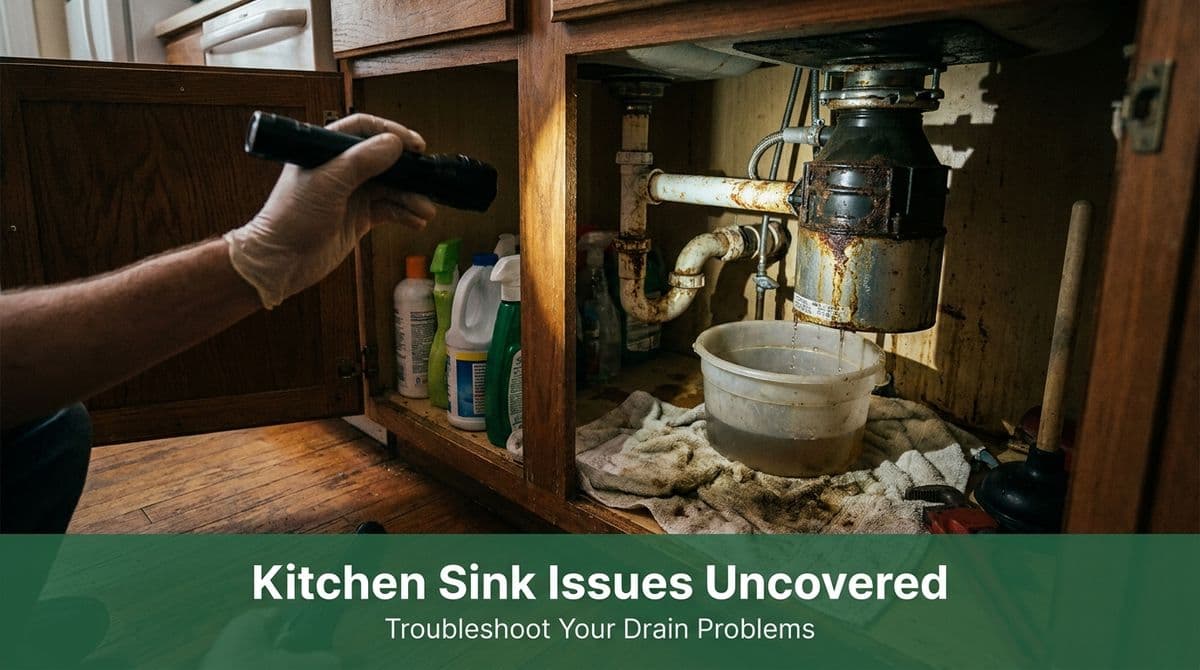
When Your Kitchen Sink Backs Up AND the Disposal Leaks
We recently got a call from a customer — let’s call her Sandra — who was having one of those “everything at once” kitchen problems. Her double-bowl kitchen sink was backing up, both sides were full of water, and to top it off, the garbage disposal was leaking onto the floor.
She told us she could still flip the switch and the disposal would turn on, and if she ran it long enough, the water would eventually drain. But in the meantime, she had standing water in both bowls and a wet floor. Her big question was the same one we hear from a lot of homeowners:
“Is this a drain problem, a disposal problem, or both?”
Let’s walk through how we talked Sandra through it on the phone, and how you can use the same steps to figure out what’s going on under your sink.
First Clue: What Exactly Is Backing Up?
One of the first things we asked Sandra was whether she had a double-bowl sink, and if so, which side was backing up. Her answer: both sides were full, and the non-disposal side was actually worse.
That detail matters. Here’s what different backup patterns usually tell us:
- Only the disposal side backs up: Often points to a problem in the short section of pipe right after the disposal — a local clog or a disposal issue.
- Both sides are backed up: Usually means the clog is in the shared drain line after the two bowls come together. That’s a drain problem, not just a disposal problem.
- Water backs up into the disposal side when you run water on the other side: Another sign the main kitchen branch line is restricted or clogged.
In Sandra’s case, the fact that both bowls were full, plus the water eventually drained when the disposal ran, was a strong hint that the drain line was partially blocked. The disposal was effectively acting like a noisy little pump, forcing some water through a clog that really needed to be cleared properly.
Second Clue: Does the Garbage Disposal Actually Run?
Next, we asked what happens when she flips the disposal switch. Sandra said it turned on, made its normal grinding sound, and the blades spun — it just happened to be leaking water underneath.
That tells us a few things:
- If the disposal hums but doesn’t spin, or trips the breaker, that’s typically a disposal mechanical or electrical issue.
- If the disposal runs normally, but the sink is still backing up, that’s more likely a drain or piping issue.
- If the disposal runs, but you see water dripping underneath, that’s a leak issue that may or may not require a new unit, depending on where the leak is.
Because Sandra’s unit still ran and helped water drain (even if slowly), we were leaning toward a clogged kitchen drain plus a separate leak problem.
How to Tell Where the Disposal Is Leaking
On the call, we told Sandra there are two main possibilities with a leaking disposal:
- A leak at the sink connection (the mounting ring and plumber’s putty)
- A leak from the disposal body itself (usually a worn-out unit)
Here’s a quick way you can check this at home:
- Dry everything off. Use a towel to dry the bottom of the disposal and all the visible pipes and joints.
- Fill the sink with a few inches of water. Stopper the disposal side, fill the bowl, then release the stopper without turning on the disposal.
- Watch with a flashlight.
- If you see water appearing at the very top where the disposal meets the sink, that’s likely a sink flange or mounting leak. Often repairable without replacing the disposal.
- If you see water seeping from seams or the bottom of the disposal housing, the internal seals are usually shot. That’s when we recommend replacing the unit.
- If water is dripping from a side connection (like the dishwasher inlet or drain pipe), the issue may just be a loose clamp, gasket, or fitting.
With Sandra, we explained that we’d be hoping to find a simple flange or connection leak, but if the housing itself was leaking, we’d talk through replacement options on-site.
Signs You Have a Drain Problem (Not Just a Disposal Issue)
When your sink is out of commission, it’s natural to blame the disposal first. But in many calls like Sandra’s, the drain is the main culprit. Look for these signs:
- Both sink bowls slow to drain, with or without the disposal running
- Gurgling sounds from the sink when other fixtures (like a dishwasher) run
- Water backing up into one bowl when you run water in the other
- Recurring clogs that come back shortly after plunging or snaking yourself
Those clues usually mean you’ve got a partial or full blockage in the kitchen branch line or further down, and it’s time for a proper drain cleaning rather than just fighting it with the disposal switch.
What You Can Safely Check Before Calling a Plumber
There are a few simple things you can do before we come out — just be careful and stop if anything feels unsafe:
- Check the P-trap (if you’re comfortable). Place a bucket underneath, loosen the slip nuts, and remove the curved trap section. Clear any obvious debris, reassemble, and test.
- Run the disposal with cold water only. Never run it dry. Cold water helps keep fats and grease from turning into a sticky mess.
- Avoid harsh chemical drain cleaners. They rarely solve deeper kitchen clogs and can damage pipes and disposals — and they’re not fun for anyone who works on your plumbing afterward.
If those basic checks don’t solve it — especially if you’ve got both a backup and a leak like Sandra did — it’s usually smarter (and cheaper in the long run) to have a professional diagnose it correctly.
When It’s Probably Both: Drain & Disposal
In the end, our advice to Sandra was the same guidance we give most customers in her situation: plan on us checking both the drain and the disposal. When you have:
- Both sides of the sink backing up, and
- The disposal still running, and
- Water leaking under the sink
…you’re very likely dealing with two separate issues that just showed up at the same time. We’ll typically clear the drain, test everything with running water, then address the disposal leak — repair if possible, replace if necessary.
If your kitchen looks anything like Sandra’s did — backed-up bowls, mystery leak under the sink, and a disposal you’re afraid to touch — you don’t have to just “live with it.” Use the clues above to get a sense of what’s going on, then schedule a visit. We’ll sort out whether it’s a drain problem, a disposal problem, or both, and get your kitchen back to normal.