Leaking Spigots & Frost-Free Hose Bibs: A Homeowner’s Guide
Leaky outdoor spigots? Learn how to tell if you have frost-free hose bibs, why they fail, and when replacement is the smarter, long-term fix.
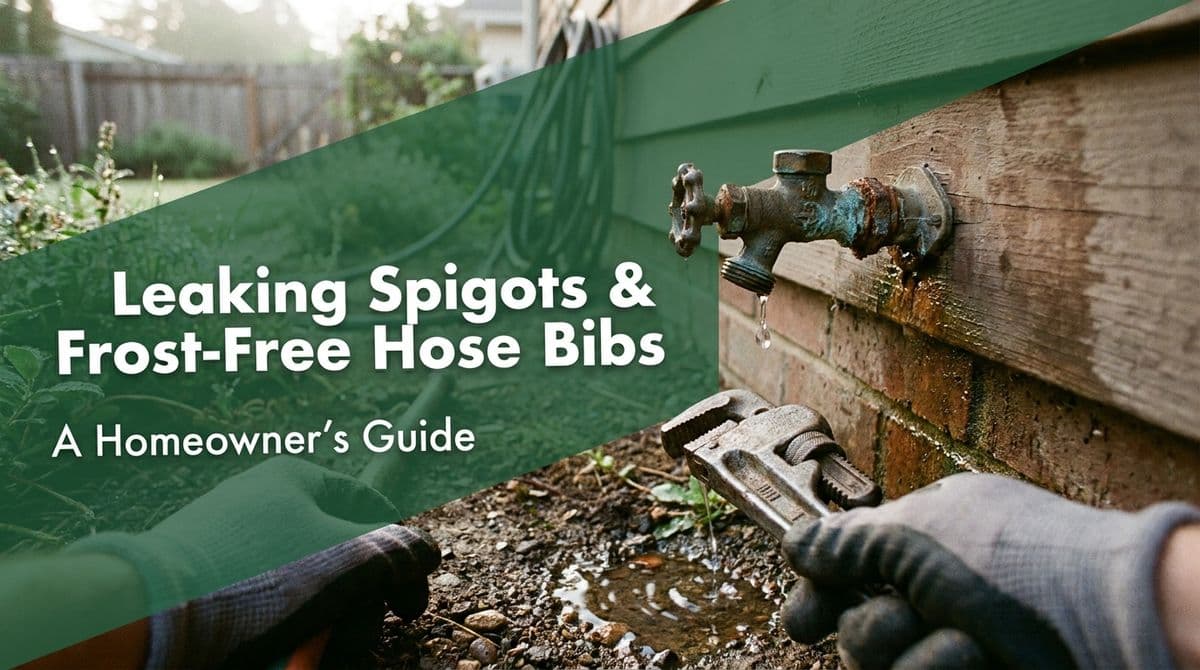
Leaking Outdoor Spigots & Frost-Free Hose Bibs: What We See Every Week
We recently got a call from a homeowner — let’s call him Mike — who had two outdoor spigots leaking badly. The handles were turned all the way off, but water was still streaming out. On top of that, the metal was covered in white, crusty buildup from hard water, so he couldn’t even read any markings.
Mike asked us two big questions that we hear all the time:
- “Do I have frost-free hose bibs or just regular old spigots?”
- “Why are they leaking so much, and is it worth replacing them?”
We walked him through what he had, why it was failing, and what replacement would look like. In this post, we’ll walk you through the same conversation so you can make a smart decision about your own outdoor spigots.
How to Tell If You Have a Frost-Free Hose Bib
From the outside, frost-free hose bibs can look a lot like old-style spigots, which is why homeowners are often unsure. Mike mentioned he had “little frost boxes” on the exterior, but the actual faucet looked like a regular spigot, and heavy mineral buildup made it hard to read any labels.
Here are a few ways we usually help people tell what they have:
- Look for markings: Many frost-free hose bibs have “Frost-Free” or a snowflake symbol stamped into the body. Some have a diamond-shaped logo on a cast aluminum plate. If you can clean off the buildup with a brush, you might uncover this.
- Check the stem length: A frost-free hose bib usually has a long stem that runs back into the wall. If you look from the side, the body of the faucet often appears longer than a standard spigot.
- Feel inside the wall (if accessible): From the basement or crawlspace, a frost-free hose bib typically extends 8–12 inches into the house before the shutoff point, whereas a regular spigot’s shutoff is right at the exterior wall.
Sometimes, as with Mike, the buildup and siding boxes make it almost impossible to tell from outside. In those cases, we confirm what’s there when we remove the old unit.
Why Outdoor Spigots and Frost-Free Hose Bibs Fail
Mike’s spigots were “closed, but still letting through a ton of water,” and he suspected their hard water was to blame. He was exactly right that water quality plays a big role, but it’s not the only culprit.
Common reasons they start leaking
- Mineral buildup from hard water: Hard water leaves calcium and lime deposits on internal parts, preventing the rubber seals from fully closing. That’s especially common when you see white, crusty buildup around the handle and spout.
- Worn internal washer or cartridge: Over time, the rubber or plastic pieces that seal the water off simply wear out, crack, or deform.
- Freezing damage: On non–frost-free spigots, water trapped in the pipe can freeze, expand, and crack the body or the internal stem. With frost-free models, leaving a hose attached over winter can trap water and defeat the “freeze protection.”
- Age and general wear: Outdoor faucets live a hard life — sun, temperature swings, being yanked around by hoses — so after many years, replacement is often more sensible than repeated repairs.
Once a spigot is leaking heavily even when fully closed, like Mike’s, the internal parts are usually too far gone to justify repair. That’s when we start talking about replacement.
When It Makes Sense to Replace Your Hose Bib
Homeowners often call us “just to get a rough estimate,” like Mike did, because they’re trying to decide whether to live with the drip or get it fixed. Here are the signs we use to recommend replacement:
- Constant dripping or a steady stream even when the handle is tight.
- Visible cracking or corrosion on the body or where it meets the wall.
- Water stains inside the home near where the pipe passes through the wall.
- Severely mineral-caked hardware where parts are no longer moving or sealing properly.
- No frost protection in a cold climate — upgrading to frost-free is cheap insurance against future freeze damage.
In Mike’s case, he had two badly leaking, heavily scaled spigots. We quoted him a per-unit price, plus explained that the final number depends on whether the existing piping is soldered or threaded, and how accessible everything is inside the wall.
What We Actually Do During a Hose Bib Replacement
Many people are nervous about what’s involved and whether we’ll need to tear into finished walls. Here’s the basic step-by-step of what to expect when we replace a hose bib:
- Shut off and drain: We locate the nearest shutoff, turn off the water, and drain any pressure from the line.
- Access the old faucet: From inside (basement, crawlspace, or mechanical room), we identify whether the hose bib is soldered, threaded, or connected with another fitting type.
- Remove the old unit: We carefully unsolder or unthread the old hose bib and pull it out from the exterior.
- Install the new frost-free hose bib: We size and set a new unit, pitched slightly downward to drain, and secure it properly to the framing or masonry.
- Reconnect to your plumbing: We make a solid, code-compliant connection (soldered, threaded, or press-fit, depending on your piping).
- Test for leaks: We turn the water back on, check for leaks inside and outside, and confirm smooth operation.
Most straightforward replacements are done in under a couple of hours. If we need to open a finished wall for access, we’ll talk that through with you before we start.
Simple Maintenance to Help Your Hose Bib Last Longer
Once your new spigots are in, a little routine care will help them last and reduce the chance of leaks and freeze damage.
- Disconnect hoses before freezing weather: Leaving a hose attached traps water in the faucet, which can freeze and crack even a frost-free unit.
- Use a shutoff inside if you have one: Many homes have an interior shutoff valve just inside the wall. Turn that off in late fall and open the outside faucet to drain.
- Do a quick spring and fall check: Turn each spigot on and off, watch for drips from the handle or spout, and look inside for any signs of moisture along the pipe.
- Manage hard water buildup: If you see early mineral deposits, gently clean them with a brush and a mild vinegar solution to keep threads and seals from getting locked up.
Quick FAQs About Frost-Free Hose Bibs
How long should a frost-free hose bib last?
With decent water quality and basic seasonal care (disconnecting hoses, draining before deep freezes), many frost-free hose bibs last 10–20 years. Extremely hard water or frequent freezing can shorten that lifespan.
Can frost-free hose bibs be installed on any exterior wall?
We can install them on most common wall types — vinyl or wood siding, brick, block, or stucco. The key is having a safe way to run the pipe through the wall and access it from inside. In some cases, we may suggest a slightly different location for the best long-term result.
Is it cheaper to repair a leaking spigot instead of replacing it?
Sometimes a minor drip at the handle can be fixed with a new packing washer, but when the faucet won’t shut off fully or the body is damaged or heavily corroded, replacement is usually more cost-effective and reliable than repeated repairs.
Not Sure What You’ve Got? We’re Happy to Take a Look
If your outdoor spigots look like Mike’s — leaking badly, caked with mineral deposits, and possibly not frost-free — it may be time to upgrade. We can identify what you have, explain your options, and replace them with modern frost-free hose bibs that are better protected against freezing and hard water problems.
You don’t have to live with a constant drip or worry about hidden freeze damage inside your walls. When you’re ready, we’re here to help get your outdoor faucets back in solid, leak-free shape.