Leaking Main Water Line on Your Neighbor’s Yard: What to Do
Main water line leaking across your neighbor’s yard? Learn repair options, how to handle permissions, and neighbor-friendly best practices from a plumber’s perspective.
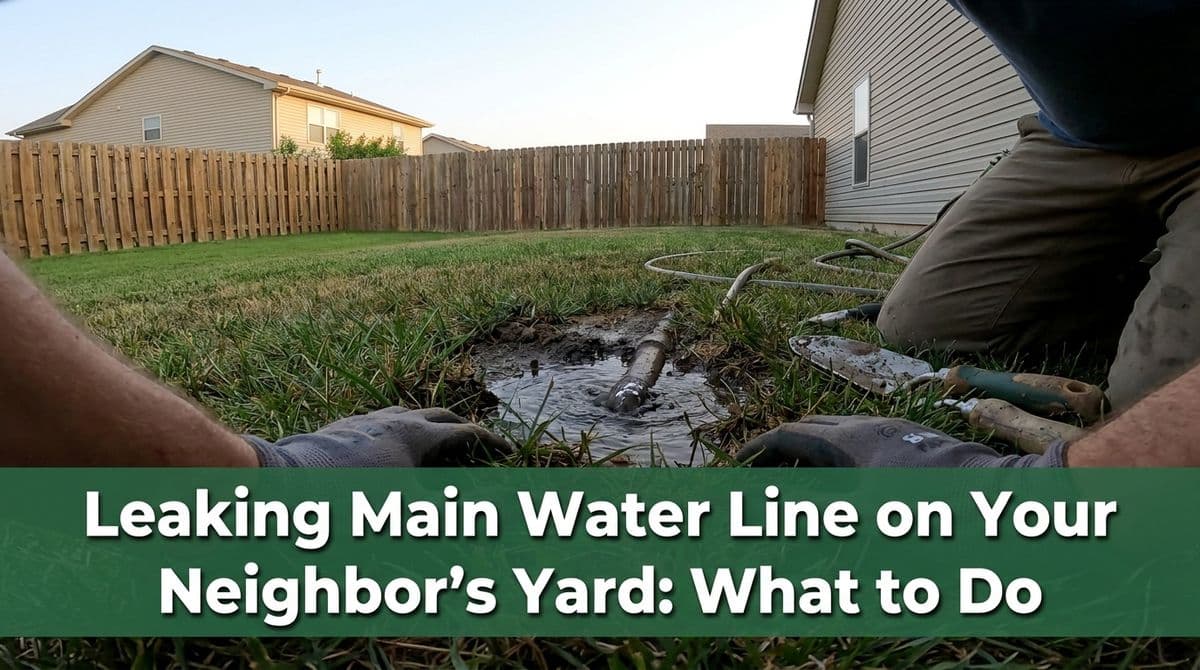
When Your Main Water Line Crosses a Neighbor’s Yard
We recently got a call from a homeowner — let’s call him Tom — who was dealing with a frustrating (and awkward) situation. His main water line ran like a “spaghetti line” across his neighbor’s property to reach his own home. The PVC line had started leaking, and his brother had tried to repair it a couple of times with compression fittings.
Each time, they’d dig up the neighbor’s yard, snug up the fittings, think it was fixed… and then the leak came back. By the time Tom called us, the holes were already open and he said what most people in his shoes are thinking:
“I just need it done right. I can’t keep doing this to my neighbor.”
If your main water line crosses a neighbor’s property and starts leaking, you’re juggling plumbing problems, property lines, and neighborly etiquette all at once. Here’s how we walk homeowners through it.
First Things First: Is It an Emergency?
When Tom called, we asked him what we always ask in these situations: “Is it currently leaking?” In his case, they had snugged the compression fittings and slowed things down for the moment. That bought him a little time to coordinate with his neighbor and schedule us for the next morning.
In your case, start with a quick assessment:
- Is water actively bubbling up or flooding the yard? Treat it as urgent. Shut off the main at the meter (or your house shutoff) and call a plumber right away.
- Is the ground just damp or soft, but not gushing? You may have a bit more time, but you still want to act quickly to avoid a bigger break or higher bill.
- Is your water bill suddenly higher with no obvious leaks inside? That’s often the first sign of a hidden main line leak.
Why Quick DIY Fixes Often Fail on Main Lines
Tom’s brother had tried to help by installing compression fittings on the 1-1/2" PVC main line. We see this a lot: a well-meaning friend or family member puts in a quick fix to avoid a bigger dig or bigger bill.
The problem is, main water lines are under constant pressure and are often exposed to soil movement, roots, and temperature changes. On a line that already runs an odd path across a neighbor’s yard, those stresses can be even worse. Common DIY issues we run into:
- Wrong fittings for the pipe material or size – especially on older or mixed-material lines.
- Improperly prepared pipe ends – not cut square, not cleaned, or not deburred.
- Fittings installed on damaged pipe – small cracks near the connection that grow over time.
- Too many “band-aid” repairs in one area – each joint becomes a potential failure point.
Compression fittings can sometimes be a temporary solution, but for a main line across someone else’s property, we usually recommend a more permanent, code-compliant repair or replacement.
Best Repair Options for a Leaking Main Line on Neighbor Property
Every property is different, but when we come out to a situation like Tom’s, these are the main options we walk through with the homeowner:
1. Proper Section Repair
If the leak is localized and the rest of the line is in good condition, we may:
- Cut out the damaged section of PVC.
- Prep and clean the pipe ends correctly.
- Install the proper couplings and primer/glue or approved mechanical fittings.
This is more than just tightening a clamp — it’s rebuilding that section so it’s as close to “like new” as possible.
2. Rerouting the Line (Often the Best Long-Term Fix)
If the line takes a strange path, has multiple repairs, or keeps failing, we’ll often recommend rerouting the main line so it no longer crosses the neighbor’s yard (if that’s feasible). That might mean:
- Running a new direct line from the meter to your house.
- Trenching or using directional boring to minimize surface damage.
- Upgrading the pipe material to something more durable and code-compliant.
This option may cost more upfront but usually saves headaches, repairs, and awkward neighbor conversations down the road.
3. Full Replacement of an Aging Line
If the pipe is old, brittle, undersized, or made of a material that’s known to fail, a full replacement is often the smartest move. We look at:
- How many repairs the line has already had.
- Water pressure and flow issues inside the home.
- Soil conditions (rocky, expansive clay, etc.).
From there, we’ll design a new route and installation that should give you decades of reliable service.
Legal and Etiquette Tips When the Line Is on Neighbor’s Land
Tom’s biggest concern wasn’t just the leak — it was the relationship with his neighbor. He’d already dug up their yard more than once, and he didn’t want to keep putting them through that.
When we work on a line that crosses another property, here’s the approach we recommend:
- Communicate early and clearly. Let your neighbor know what’s happening, when you’re scheduling work, and roughly how long it will take.
- Get permission in writing if possible. Even a simple email or text confirming, “Yes, you can access my yard on this date to repair your water line” can help avoid misunderstandings.
- Respect their landscaping. We plan our trenches and access points to minimize impact and restore the yard as close as possible to original.
- Offer to make things right. If shrubs, lawn, or decorative rock get disturbed, let them know you’ll repair or replace within reason.
Legally, the details can get complicated depending on easements, local codes, and how the line was originally installed. As the homeowner benefiting from the water service, you’re generally responsible for the line from the meter to your house — even if it passes through another property. That’s why it’s so important to choose a permanent solution, not just another patch.
How to Spot a Hidden Main Line Leak Early
Tom’s leak was obvious — they could see the wet area once they dug into the neighbor’s yard. But many main line leaks hide for a while before becoming visible. A few signs to watch for:
- Unexplained high water bills over two or more cycles.
- Wet, squishy, or unusually green patches of grass along the path from the meter to your home.
- Low water pressure inside the home, especially when multiple fixtures run.
- Sound of running water near the meter or where the line enters the house when no fixtures are on.
If you suspect a leak, don’t wait for it to become a full-blown flood or a neighbor complaint. The earlier we can locate it, the less digging and disruption it usually takes to fix.
What to Expect When We Come Out
Tom needed to coordinate with his neighbor, so we scheduled a morning window and walked him through what the visit would look like. If you’re in a similar situation, here’s our typical process:
- Walk-through and discussion. We meet you (and the neighbor, if they’re available), review the leak area, and confirm property boundaries and access.
- Locate and assess the line. We’ll identify the pipe material, size (Tom’s was 1-1/2" PVC), depth, and overall condition.
- Present repair options. We’ll explain what we recommend: spot repair, reroute, or replacement — including pros, cons, estimated costs, and how invasive each option is.
- Perform the work. Once you approve the plan, we carry out the repair or replacement, keeping you updated if we find anything unexpected underground.
- Test and restore. We pressure-test the line, check for leaks, and then backfill and clean up as neatly as conditions allow.
Throughout the process, we’re mindful that we’re working in someone else’s yard. Clear communication and careful cleanup go a long way toward keeping everyone happy.
FAQs About Main Water Lines on Neighbor Property
Am I responsible for the line even if it’s on my neighbor’s land?
In most areas, yes. You’re typically responsible for the service line from the meter (or property line) to your home, regardless of the path it takes. Easements, shared driveways, or older installations can complicate things, so if there’s a dispute, you may want to consult your local water utility or a real estate attorney.
Should I call the city or water company first?
If the leak appears to be at the meter, in the street, or clearly on public right-of-way, start with the city or water utility. If the leak is between the meter and your home — like Tom’s — that’s usually your responsibility, and you’ll want to call a licensed plumber.
Do I need my neighbor to be home during the repair?
It’s best if they’re available, especially for the first visit, so we can walk through access points and answer questions. At minimum, you should have their written permission to enter the property and perform the work.
Handling It the Right Way
If you’re staring at a soggy spot in your neighbor’s lawn and worrying about the next conversation with them, you’re not alone. We see setups like Tom’s more often than you’d think. With the right plan — a solid repair or reroute, good communication, and respect for the neighbor’s property — you can solve the plumbing issue and protect that relationship.
If you’re dealing with a leaking main water line that crosses a neighbor’s yard, we’re happy to come out, take a look, and help you choose the best long-term fix.