Septic Inspections for Home Sales: Certified & Pumped
Getting a home ready to sell with a septic system? Learn what “pumped and certified” really means, what inspectors look for, and how it affects buyers and sellers.
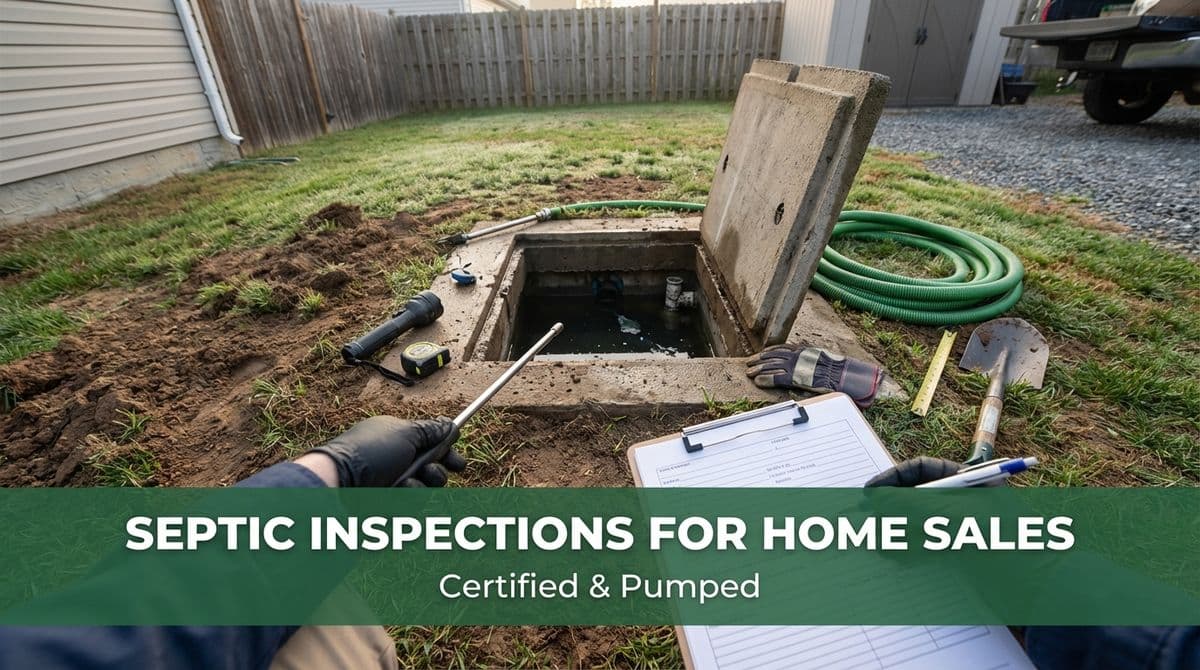
“Certified and Pumped” – A Call From a Concerned Seller
We recently got a call from a customer — let's call her Amy — who was getting her dad’s home ready to sell. Her realtor told her, “You’ll need to have the septic inspected, cleaned, and certified.”
Amy’s dad had built the home himself years ago, and now he was in a memory care facility, so there wasn’t much documentation about the septic system. Amy told us, “I don’t really understand what I’m talking about, so bear with me.” If you’ve ever felt that way about a septic system, you’re not alone.
In this post, we’ll walk you through the same things we explained to Amy: what septic inspections for home sales really involve, why “certified and pumped” matters to both sellers and buyers, and what to expect when we come out.
Why Septic Certification Matters When You Sell
When a home has a septic system, most real estate agents — and any careful buyer — will want proof that the system is in good working order. A failed septic isn’t a small repair; it can be a major, expensive project.
That’s where a septic inspection and certification come in. As we explained to Amy, certification is essentially a professional statement that, at the time of inspection, the tank and system meet basic performance and safety standards. It gives buyers confidence and helps sellers avoid last-minute surprises that can delay or derail a sale.
“Do You Just Pump It, Or Is It An Inspection Too?”
One of Amy’s big questions was whether we just pump the tank or also inspect it. The answer: for a real estate sale, you usually need both.
Here’s why:
- Pumping removes the accumulated solids and liquids from the tank.
- Inspection is where we actually evaluate the condition and function of the system.
We explained to Amy that we can’t properly inspect the tank walls and interior if it’s full. So for a sale-related inspection, it does need to be pumped as part of the process. Once it’s empty, we can see what’s really going on.
Exposed Lids vs. Buried Lids: Why It Affects Cost
Amy also asked whether we “come out and look at it and give an estimate” and whether the lids being exposed changes anything. It absolutely does.
On her dad’s property, she thought the lid was visible, maybe with a mat or something covering it as a marker. That’s actually good news, and here’s why:
- If the lids are above ground and exposed, we can access the tank immediately. That keeps labor and cost down.
- If the lids are buried, we first have to locate the tank and dig to expose the lids before we can pump or inspect it.
When you’re getting ready for a septic inspection, it’s helpful to walk the yard and see if you can spot any lids, risers, or markers. If you’re not sure what you’re looking at, we can help identify it when we arrive.
What We Do During a Septic Inspection for a Home Sale
For a typical sale-related septic inspection and certification, here’s the general process we follow:
- Locate and access the tank
We confirm the tank location and uncover the lids if needed. If there are risers and lids already visible, this step is quick. - Pump the tank
We remove the contents of the tank so we can see the interior. As we told Amy, we had just finished pumping another tank the same day we spoke with her — it’s a standard part of getting a system ready to be certified. - Inspect the tank structure
With the tank empty, we visually check the walls, baffles, and overall condition for cracks, deterioration, or other damage. - Evaluate system function
Depending on access and local requirements, we may check how wastewater flows into and out of the tank and whether there are any obvious signs of failure, such as backups or surfacing effluent in the yard. - Document findings and, if appropriate, issue certification
If the system is in acceptable condition, we provide documentation that it passed inspection and was pumped. If we find problems, we outline what needs to be addressed.
Common Issues We Find During Septic Inspections
Most systems we inspect for home sales are in fair shape, but we do run into recurring issues sellers should know about ahead of time:
- Damaged or missing baffles – These internal components help keep solids in the tank. If they’re cracked or gone, solids can clog the drainfield over time.
- Cracked tank walls or lids – Structural damage can allow groundwater in or sewage out, both of which are red flags for a buyer.
- Roots intruding into the tank or lines – Tree roots love moisture and can invade joints, causing blockages and leaks.
- Evidence of overloading – Constant high water use or plumbing leaks can overload a system, sometimes visible as unusually high liquid levels or stressed drainfields.
Finding one of these issues doesn’t always mean a full system replacement. Sometimes targeted repairs or adjustments are enough to bring the system up to acceptable condition for a sale. The key is catching problems during the inspection, not after a buyer moves in.
Costs, Timing, and Local Rules
Another thing we always remind sellers and buyers: local regulations and real estate practices can affect what’s required for septic certification. Some areas have very specific standards for inspections, pumping intervals, or paperwork; others are more flexible and guided by buyer–seller agreements.
As for cost, a few factors make the biggest difference:
- Whether lids are exposed or buried
- The size and accessibility of the tank
- Any additional diagnostic work requested or required
If you’re planning to sell, it’s wise to schedule the inspection early in the listing process. That way, if we do find anything that needs attention, you have time to address it without holding up closing.
Tips for Sellers and Buyers Dealing With Septic Systems
Whether you’re in Amy’s position as a seller or you’re the one buying the home, here are a few practical tips:
- Sellers: Ask your agent early about septic expectations in your area and budget for pumping and inspection.
- Sellers: Gather any old septic records, permits, or past pumping receipts to share with your inspector and potential buyers.
- Buyers: Make sure your offer or purchase agreement clearly states who is responsible for septic inspection, pumping, and any repairs.
- Buyers: Request copies of the inspection report and pumping receipt for your records; they’ll be useful down the road.
Need a Septic System “Certified and Pumped” Before Closing?
When Amy called us, she was overwhelmed and unsure where to start. By the end of our conversation, she understood exactly why her realtor was asking for septic certification, what “pumped and inspected” really meant, and what steps we’d take on the property.
If you’re preparing to sell a home with a septic system — or you’re in escrow and the inspection deadline is coming up — we’re here to walk you through the process just like we did with her. We’ll explain what we’re doing, what we find, and what it means for your sale, so you can move toward closing with confidence.