Sewer Camera vs Whole-House Plumbing Inspection: A Guide
Learn the difference between sewer camera inspections and whole-house plumbing inspections, what each one checks, and how to know which your home actually needs.
Do I Need a Sewer Camera or a Whole-House Plumbing Inspection?
We recently got a call from a homeowner — we’ll call him Kevin — who had a great question: should he schedule a sewer camera inspection or a whole-house plumbing inspection?
Kevin had some water showing up around his water heater and was worried it might be coming from underground. He’d heard us mention a camera inspection fee on a previous call and wanted to know if we could run a camera through all his pipes to find the problem.
That’s where the confusion started. He asked, “Can you run the camera through the pipes in the house, or is it just the main sewer line? Because the pipes are troublesome.” We walked him through the difference, and that conversation is exactly what inspired this post.
What a Sewer Camera Inspection Actually Checks
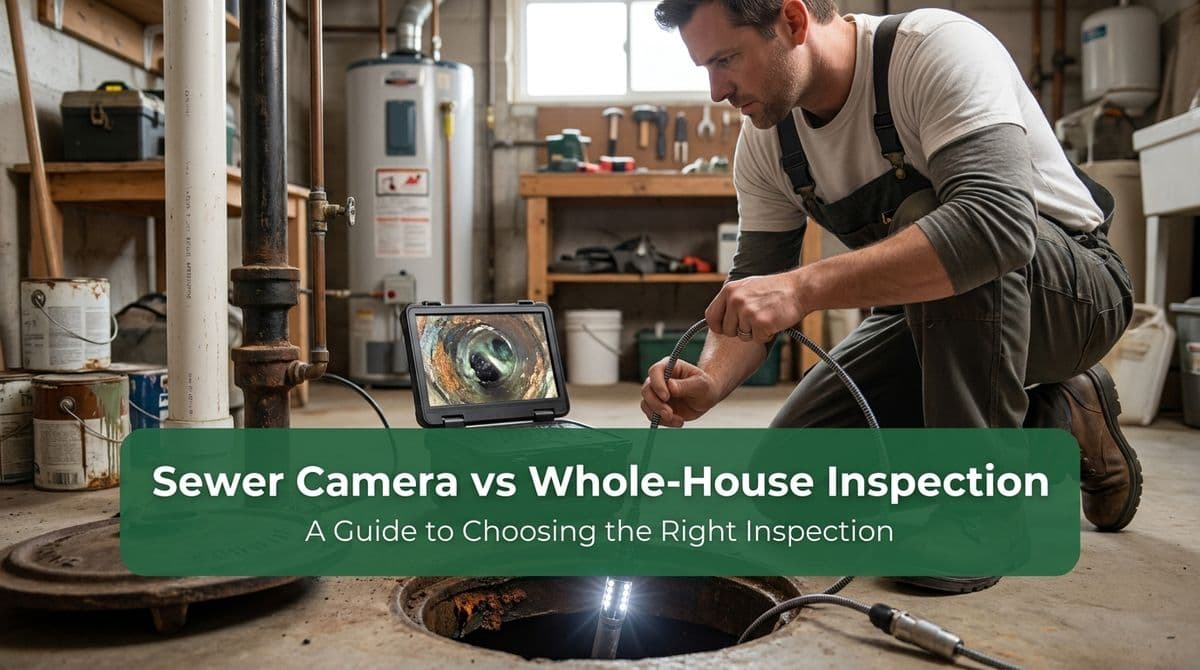
A sewer camera inspection focuses on one thing: the main sewer line that carries wastewater from your home out to the city sewer or septic tank. We’re not looking inside your pressurized water pipes; we’re looking inside the drain line.
When we talked with Kevin, we explained that no reputable plumber runs a camera through water supply pipes. The camera is designed to travel through larger drain lines and the main sewer, not the smaller pressurized lines that deliver clean water.
How a Sewer Camera Inspection Works
Here’s what we do during a sewer camera inspection:
- Access the line through a cleanout or pulled toilet
- Feed a specialized camera on a flexible cable into the sewer line
- Watch a live video feed as the camera travels down the pipe
- Mark depth and location of any problems from above ground
We’re looking for things you can’t see from inside the house because the pipe is underground:
- Offsets — where sections of pipe have shifted out of alignment
- Bellies — low spots in the line where water sits and solids collect
- Roots intruding through joints or cracks
- Cracks, breaks, or collapses in the pipe
- Material type and condition (clay, cast iron, PVC, etc.)
When a Sewer Camera Inspection Makes Sense
You’ll usually want a sewer camera inspection when you have:
- Frequent or unexplained main line clogs or sewage backups
- Slow drains throughout the whole house
- Older clay or cast iron sewer pipes
- Large trees near the sewer line (root risk)
- A pending home purchase where you want to know the sewer’s condition
What a Whole-House Plumbing Inspection Covers
When Kevin asked about problems with “the piping throughout the house,” we shifted the conversation to a whole-house plumbing inspection. This is a much broader look at your plumbing system than a single sewer line check.
Instead of focusing on just one pipe, we check the overall health of your supply and drain systems, and all the fixtures tied into them.
How a Whole-House Plumbing Inspection Works
A typical whole-house plumbing inspection includes:
- Visual inspection under sinks for leaks, corrosion, and improper traps
- Checking visible water lines in basements, crawl spaces, and utility rooms
- Inspecting drains and vents where accessible
- Testing fixtures — toilets, faucets, showers, tubs, and shutoff valves
- Water heater inspection — age, safety valve (T&P), venting, and leaks
- Water pressure check at hose bibs or fixtures
- Meter check for hidden leaks by watching if the water meter spins when no water is being used
On Kevin’s call, we explained that if there’s a fresh water leak above ground, you almost always see signs: water stains, drips, damaged drywall, or wet flooring. For underground leaks, we use that meter test, then get under the home (if possible) to look for wet soil, corrosion, or active dripping on the piping.
When a Whole-House Plumbing Inspection Is the Better Choice
Choose a whole-house inspection when you’re dealing with:
- General concerns about the age or condition of your plumbing
- Small or slow leaks you can’t quite locate
- Low water pressure or inconsistent hot water
- A home purchase, especially with an older home
- Water showing up around the water heater, under sinks, or in the crawl space
In Kevin’s case, with water appearing near the water heater, we recommended a whole-house inspection first to visually check the heater, nearby piping, and any accessible lines before deciding if a sewer camera was necessary.
Typical Costs and What You Get
On our call, Kevin had heard our sewer camera inspection price and asked about the cost difference. In many homes, the difference between a camera-only visit and a full inspection is relatively small.
In general (and these are ballpark ranges that vary by market and access):
- Sewer camera inspection: Often in the low-to-mid hundreds of dollars
- Whole-house plumbing inspection: Typically only modestly more, because we’re already on site
That’s why we often recommend, when you’re on the fence, to invest in the whole-house inspection. You get a broader picture of your plumbing’s health for not much more than the cost of a single-line camera check.
How Often Should You Schedule Each Type of Inspection?
Here’s a simple guideline we share with homeowners:
- Newer homes (under 15 years): Whole-house inspection every 5–7 years, or sooner if you notice symptoms.
- Older homes (15+ years): Whole-house inspection every 2–3 years; pipes and fixtures are more prone to wear.
- Sewer camera inspection: Once when you buy the home, then as needed if you have backups, slow drains, or large trees over the line.
Simple Checklist Before You Call a Plumber
Before you pick up the phone, a quick checklist can help us steer you toward the right type of inspection and save you time on the call:
- Where is the problem showing up? Single fixture, multiple fixtures, or the whole house?
- What kind of water is it? Clean water, cloudy, or sewage-smelling?
- How often does it happen? Constantly wet, only after showers, only when you flush, or during heavy rain?
- Any gurgling or slow drains? Note which sinks, tubs, or toilets are affected.
- Have you checked the water meter? With all water off, see if the meter dial is still moving.
- Take a few photos or a short video of the leak area, the water heater, or any puddles.
Sharing these details with us, like Kevin did, helps us decide whether to start with a sewer camera inspection, a whole-house plumbing inspection, or sometimes a simple repair at a specific fixture.
Which Inspection Do You Really Need?
If your main symptom is backups, slow drains, or sewer smells affecting multiple fixtures, a sewer camera inspection is often the right first step.
If your main symptom is leaks, water stains, odd puddles, or general plumbing concerns around the home, a whole-house plumbing inspection will usually give you more value and a clearer picture.
And if you’re not sure, do what Kevin did and call us. We’ll ask a few questions, talk through what you’re seeing, and point you toward the inspection that makes the most sense for your home and budget.