Stubborn Toilet Clogs & What Plumbers Really Do Next
Some toilet clogs won’t clear with a plunger or auger. Learn why, what’s safe to try, when it’s a main line or septic issue, and how plumbers fix deep blockages.
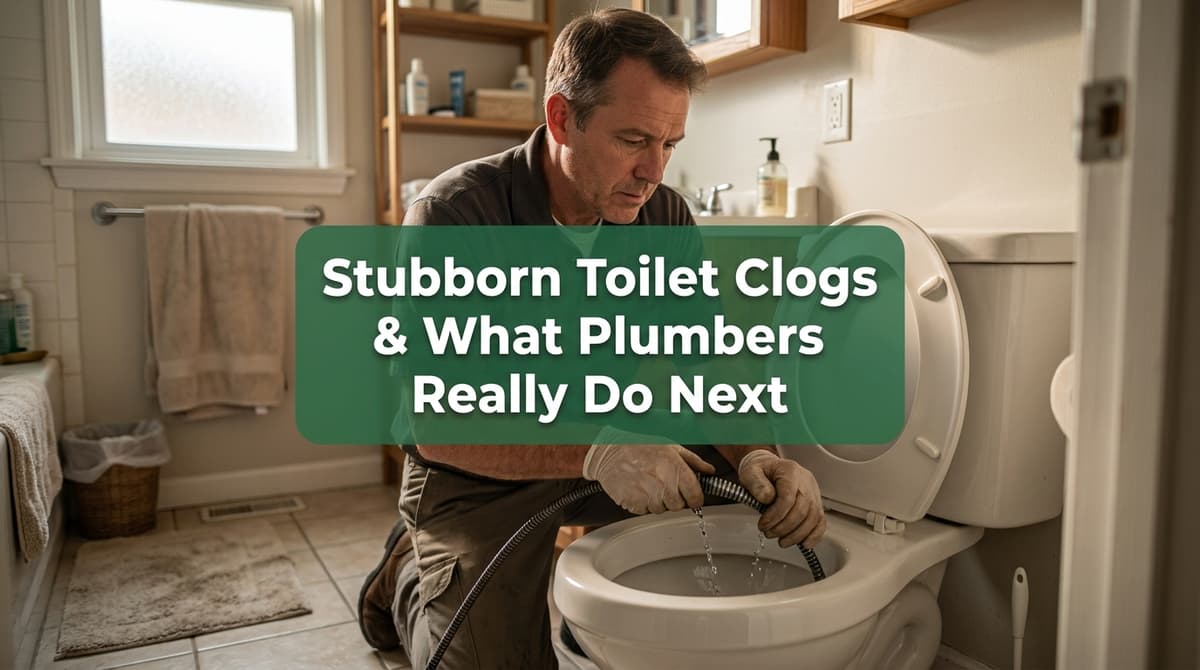
When a Toilet Auger Just Isn’t Reaching the Clog
We recently got a call from a homeowner — let’s call him Gary — who lives not too far from us. Gary had a toilet that just wouldn’t clear. He’d already tried a toilet auger, and while it pulled a little waste back, it “wasn’t getting in far enough,” as he put it.
That description is something we hear a lot. The handle cranks, the cable goes in, you get a little gunk out, but the toilet is still slow or completely backed up. Gary was also on a septic system and had never really had this problem before, so he wasn’t sure if it was a toilet issue, a deeper clog, or something with the septic.
Situations like Gary’s are exactly why we want to walk you through what’s really going on with stubborn toilet clogs — the kind that don’t respond to a plunger or a toilet auger — and what we, as plumbers, actually do next.
Why Some Toilet Clogs Don’t Clear With DIY Tools
A basic plunger and a standard toilet auger are great first-line tools, but they do have limits. When they stop working, it usually means at least one of these is happening:
- The clog is too far down the line. A typical toilet auger only reaches about 3–6 feet past the toilet bowl, mostly through the toilet’s internal trap and into the drain right behind it. If the blockage is farther out, the auger simply can’t reach.
- The blockage is too dense or compacted. Heavy paper use, wipes, or a foreign object can create a mass that a small-diameter auger just tunnels through or barely scratches.
- The pipe is partially blocked, not fully plugged. Water may slowly drain, but any additional flushing overwhelms the narrow opening. DIY tools might loosen things slightly but can’t fully restore the pipe’s original diameter.
- There’s an underlying pipe or root problem. In older homes or septic systems, tree roots, pipe bellies (low spots), or misaligned joints can snag debris and keep rebuilding clogs.
How Far a Toilet Auger Really Reaches
When Gary told us he had “a long handle with a crank and a thing on the bottom,” we knew he was using a standard toilet auger. These are designed to protect the porcelain and navigate the toilet’s trap, but they’re not a cure-all.
Here’s what most homeowners can expect from a toilet auger:
- Reach: Usually 3–6 feet of cable. That’s enough to clear most clogs inside the toilet and just beyond it, but not the whole bathroom line, and definitely not out to the main.
- Best use: Clearing typical toilet clogs: too much paper, small soft objects, or localized buildup right at the toilet.
- Limitations: It can’t effectively clear heavy scale, thick grease, root intrusion, or clogs far down the line. Forcing it can kink the cable or scratch the toilet if used incorrectly.
If you feel solid resistance early and it never “breaks free” — or the water level stays high after several careful attempts — the problem likely isn’t within auger range.
Safe vs. Risky DIY Methods for Stubborn Clogs
Before we talk about what we do as professionals, it’s important to talk about what you should and shouldn’t try at home.
Safer DIY steps to try first
- Plunge correctly. Use a flange plunger designed for toilets, ensure a good seal, and plunge with steady, firm strokes for 30–60 seconds at a time.
- Use the toilet auger gently. Feed the cable slowly, crank steadily, and stop if you feel the auger binding or scraping porcelain.
- Give it time between attempts. If the water level is high, wait for it to drop before trying again to avoid overflows.
Methods we don’t recommend
- Chemical drain cleaners: They can be harsh on older pipes, dangerous if they splash, and they don’t play well with toilet bowls or septic systems.
- Homemade “tools” (wire hangers, sticks, etc.): These can scratch or crack the porcelain and get stuck in the trap, making the problem worse.
- Excessive force with an auger: Leaning your full body weight on the handle or cranking aggressively can damage the toilet’s internal glazing or even crack the bowl.
When It Might Be a Main Line or Septic Issue
Because Gary was on a septic system and mentioned having it pumped in the past, we also had to consider that the problem might be beyond the toilet itself.
Here are some signs the issue could be in the main line or septic system:
- Multiple fixtures are slow or backing up. If toilets, tubs, and sinks in the same area are all sluggish, it’s often a main line problem.
- Gurgling sounds in other drains. Flush a toilet and hear a tub or sink gurgle? That’s a red flag for a deeper blockage.
- Backups in the lowest fixtures. If a basement or first-floor shower backs up when you flush, the main line is suspect.
- For septic systems: Wet, spongy ground or odors near the tank or drain field can indicate the septic side of the system is struggling.
If you’re seeing any of these signs, it’s time to stop plunging and call a plumber. Continuing to use fixtures can push sewage into places you really don’t want it — like tubs, showers, or floor drains.
What We Do Next: Professional Diagnosis
When we arrive at a home like Gary’s, we start with some simple questions and tests before we ever bring in heavy equipment.
- We check other fixtures. Are other toilets flushing normally? Are sinks and tubs draining? This tells us if it’s isolated to one toilet or part of a bigger issue.
- We test the toilet itself. Sometimes, a worn-out or poorly designed toilet traps clogs more easily. If we suspect an object in the trap (toys, hygiene products, etc.), we may need to pull the toilet.
- We locate cleanouts. Exterior or interior cleanout ports let us access the main line directly, which is safer and more effective than attacking everything through the toilet.
How We Clear Deep or Stubborn Toilet Clogs Safely
Once we know what we’re dealing with, we choose the right method to clear the blockage without damaging your toilet or pipes:
- Professional drain machines (longer, stronger cables). These are more powerful versions of what you might rent, with longer cables that can reach far down the line and different cutting heads for roots, grease, or heavy buildup.
- Toilet removal, when necessary. If we suspect something is lodged in the toilet itself, we may carefully remove the toilet, clear the object from the underside, and reset it with a new wax ring.
- Camera inspection. For repeat problems or older homes, we can run a camera through the line to see exactly what’s causing the issue — roots, broken pipes, sags, or foreign objects.
- Gentle line flushing. In some cases, after cabling, we’ll run water to ensure the line is flowing properly and to wash away loosened debris.
Throughout the process, our goal is the same: clear the clog, protect your fixtures, and prevent repeat problems. That’s why we avoid “shortcut” methods that might get the water moving today but damage your system long-term.
When to Stop DIY and Call a Plumber
If you’re in Gary’s situation — you’ve plunged, you’ve used a toilet auger, and the toilet still isn’t right — it’s usually time to bring in help. In general, call a plumber when:
- You’ve tried a plunger and auger carefully with no improvement.
- The water level in the bowl stays high or rises quickly with each flush.
- Other drains in the home are slow, gurgling, or backing up.
- You’re on a septic system and haven’t had it inspected or pumped in years.
We understand that nobody enjoys making that call, especially if it’s the first time you’ve ever had to bring in a plumber. But in many cases, having us out early prevents bigger messes, protects your toilet and pipes, and gives you peace of mind that the problem is fully solved — not just pushed a little farther down the line.
If you’re staring at a stubborn clog that just won’t budge, you’re not alone. We help homeowners with this every week, and we’re here to get your bathroom back to normal safely and efficiently.