Tankless Water Heater Maintenance 101
Wondering how often to service your tankless water heater and why flush valves matter so much? Here’s what we tell homeowners based on real service calls.
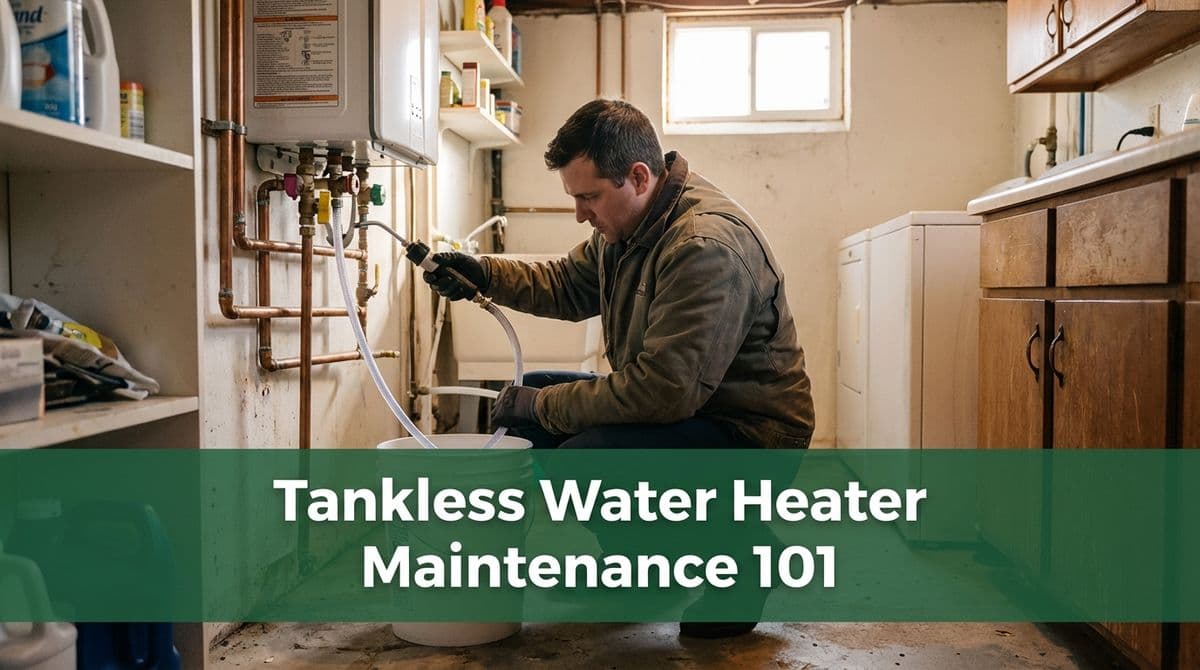
We recently got a call from a homeowner — let’s call her Carol — who had a great question about her tankless water heater. Carol told us her unit was a few years old, she wasn’t having any problems, but she’d never done any maintenance and was starting to wonder if she was overdue.
A Real Call, Real Questions About Tankless Maintenance
On the call, we asked Carol one of the first questions we always ask: “Do you have a water softener?” When she said no, our answer was the same one we’ve given many times: without a softener, you really should be servicing that tankless about every 12 months.
Carol also wasn’t sure if the installer had put in a flush valve kit. That’s another thing we run into constantly. The tankless itself usually doesn’t come with those valves, and some installers cut corners to save a few bucks by leaving them out. From what we see in the field, that one decision can make future maintenance harder and more expensive.
How Often We Recommend Servicing a Tankless Water Heater
When homeowners ask us how often to service a tankless, we don’t just quote the manual; we base our answer on what we see day in and day out in local homes.
- With no water softener: We recommend a full flush and inspection every 12 months.
- With a good softener and mild water: You can sometimes stretch it to 16–18 months, but we still like to lay eyes on it at least once a year.
Why so often? Because mineral buildup (scale) doesn’t give you a warning light. It builds slowly inside the heat exchanger and passages until one day you notice the hot water pressure dropping or the unit throwing error codes. By the time many people call us, we’re dealing with a choked-up unit instead of a simple preventative flush.
Why Flush Valves Matter So Much
During Carol’s call, we talked about the flush valve kit — and this is where we see a big divide between “easy-to-maintain” tankless systems and “pain-in-the-neck” ones.
A proper flush valve kit includes isolation valves and service ports right at the water heater. When those are installed correctly, we can:
- Isolate the heater from the home’s plumbing
- Hook up hoses easily to circulate descaling solution
- Flush the system in 45–60 minutes without cutting into pipes
When those valves are missing, here’s what we often have to do:
- Shut down the system and partially disassemble the piping
- Cut in new isolation/flush valves
- Re-pipe and test everything before we can even start flushing
We’ve seen plenty of installs where skipping the flush valve kit saved the original installer a little time, but it costs the homeowner more down the road. That’s why we always recommend having proper flush valves installed if they aren’t there already.
What Actually Happens If You Skip Maintenance
Carol mentioned that her hot water pressure was fine — and that’s great news. But we shared with her what we see when folks wait too long on maintenance, especially in harder water areas.
Without regular flushing and inspection, you can run into:
- Low hot water pressure: Mineral scale builds up in the heat exchanger and passages, choking the flow on the hot side only.
- Inconsistent temperatures: The unit struggles to transfer heat through the scaled-up surfaces, so you get fluctuating hot water.
- Error codes and shutoffs: Sensors start seeing abnormal temperatures or restricted flow and the unit begins to lock out.
- Shortened equipment life: The burner and heat exchanger work harder, and in our experience, neglected units simply don’t last as long.
From our side of the wrench, we’d much rather visit you for a straightforward, scheduled flush than for an emergency “no hot water” call where parts might already be damaged.
What to Expect During a Professional Tankless Service
Homeowners like Carol often ask what we actually do during a maintenance visit. While every brand is a little different, our typical annual tankless service includes:
- Checking for proper gas, water, and vent connections
- Inspecting for leaks, corrosion, and signs of overheating
- Hooking up to the flush valves and circulating a descaling solution
- Rinsing the system thoroughly to remove cleaning solution
- Cleaning inlet filters and screens
- Testing water temperature, flow, and burner operation
- Reviewing any error history and answering your questions
When we wrap up, we’ll usually give you a simple recommendation on when to schedule the next service based on what we saw inside the unit and your water conditions.
Can You Flush a Tankless Water Heater Yourself?
We’re often asked, just like Carol did, whether a homeowner can handle the flush on their own to save a little money. Here’s the honest answer we’ve learned over years of working on these systems:
- If you have proper flush valves, are comfortable turning off gas and power, and carefully follow the manufacturer’s instructions, many handy homeowners are able to do their own flush.
- We do not recommend DIY flushing if there are no service valves, if you’re unsure how to isolate the unit safely, or if your heater is already acting up or throwing codes.
Our rule of thumb is: if anything about the setup makes you pause, it’s safer to let us handle it. We see the inside of these units every day and can spot small issues before they become bigger repairs.
Simple Takeaways for Your Own Tankless
In the end, we helped Carol schedule a visit so we could verify whether she had flush valves and get her tankless back on a regular maintenance track. If you’re in a similar spot, here’s what we recommend based on what we see in real homes like yours:
- Plan on annual maintenance if you don’t have a water softener.
- Make sure you have a flush valve kit installed for easier, cheaper service.
- Don’t ignore low hot water pressure or new error codes — those are early warning signs.
- Ask us to take a quick look at your setup and give you a personalized schedule.
Staying ahead of tankless water heater maintenance isn’t complicated, but it does take a little consistency. We’re always happy to walk you through what your particular unit needs and help keep it running efficiently for years to come.