Why Is My Toilet Leaking Under My Mobile Home?
Toilet leaking under your mobile home? Learn the common causes, risks, and how pros diagnose and repair hidden leaks before they destroy your floors.
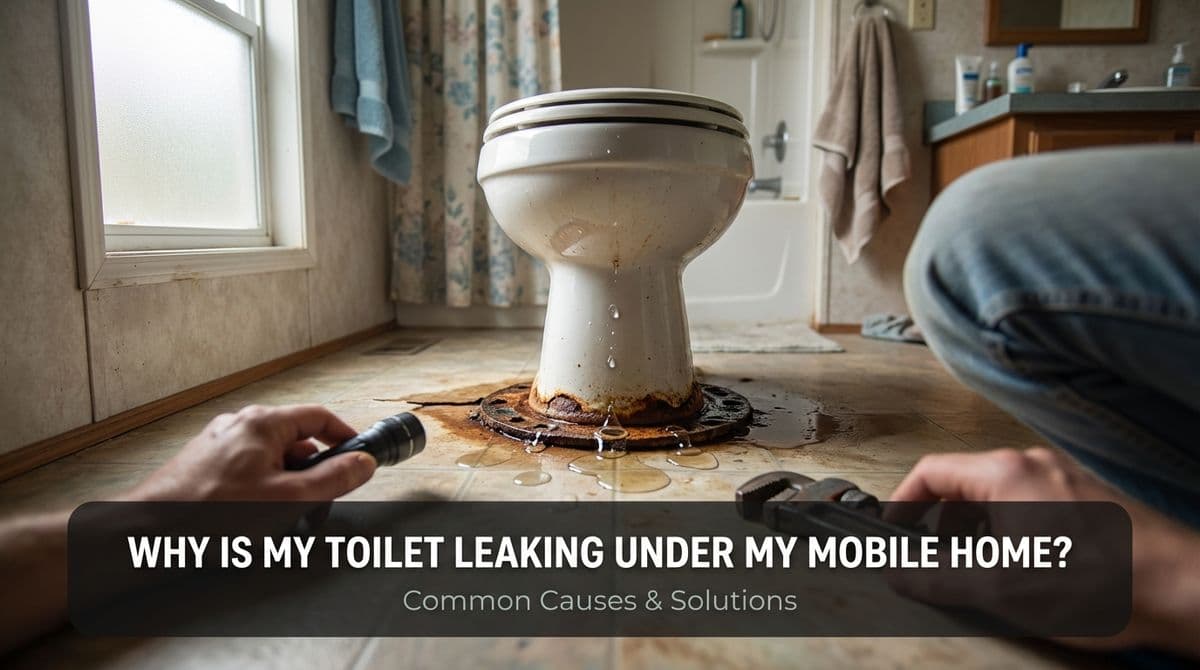
When a Toilet Leak Hides Under a Mobile Home
We recently got a call from a customer — let’s call her Ashley — who told us, “My toilet’s leaking under the house… well, it’s a mobile home.” She couldn’t see water on the bathroom floor, but she could smell a musty, sewer-like odor outside near the skirting, and the ground felt damp under that part of the home.
Ashley wanted to know two things right away: how much it would cost for us to come take a look, and how serious the problem really was. We explained our diagnostic fee and got her scheduled for the next morning, then walked her through what might be going on under the home and what our plumbers would do when they arrived.
Since we get this kind of call a lot from mobile home owners, we thought we’d share the same explanation we gave Ashley: the most common causes of toilet leaks under a mobile home, the risks of waiting, and how our team typically fixes them.
Why Mobile Homes Are Prone to “Hidden” Toilet Leaks
In a site-built house, if a toilet leaks badly, you usually see it right away on the bathroom floor or ceiling below. In a mobile or manufactured home, the plumbing often runs in the crawl space below the floor, and there’s space between the subfloor and the ground.
That means a lot of leaks never show up on the bathroom floor. Instead, they drip into insulation, onto plastic vapor barriers, or directly onto the soil under the home. By the time a homeowner calls us, they usually notice:
- Soft or spongy flooring around the toilet
- Musty or sewer odors inside or outside
- Extra moisture or mud under that section of the home
- Higher water bills without a clear reason
That’s exactly what we were expecting to find at Ashley’s place.
Common Causes of Toilet Leaks Under a Mobile Home
Once we’re onsite, our team starts with a visual check around the toilet and then inspects the area underneath the home. In mobile homes, we most often find one (or a combination) of these issues:
1. Failed Wax Ring or Toilet Seal
The wax ring (or rubber seal on some newer models) sits between the toilet and the floor flange and keeps wastewater from escaping. If it’s damaged, misaligned, or compressed over time, sewage can leak every time the toilet is flushed — straight down into the floor cavity or crawl space.
On jobs like Ashley’s, we often see staining and dampness right under the toilet area, with no obvious water on the bathroom floor because it drains downward instead of out.
2. Loose or Cracked Toilet Flange
The flange is the fitting that connects the toilet to the drain pipe. In mobile homes, movement from settling, transport, or shifting piers can stress that connection. If the flange cracks or pulls loose, it can create a gap where wastewater escapes under the home.
We also sometimes find that the flange was never properly secured to the subfloor, which makes it easier for the toilet to rock and eventually break the seal.
3. Damaged Drain Line Under the Home
Because the drain lines run under the home, they’re more exposed to temperature swings, vibration, and physical damage. Common problems include:
- Cracked or sagging ABS or PVC drain lines
- Loose or misaligned joints where pipes connect
- Improper slope causing standing sewage in the line
On some mobile home calls, we discover the toilet itself is fine, but the leak is a few feet down the line, where a fitting has separated or a hanger has failed.
4. Supply Line or Tank Leaks
Not every “under the home” leak is sewage. A leaking supply line, shutoff valve, or toilet tank bolt can run down through the floor opening and drip beneath the home. This still causes moisture damage and mold, even if the water is technically clean.
Why You Shouldn’t Ignore a Leak Under a Mobile Home
When we explained the risks to Ashley, she understood why we recommended addressing it quickly, even though she didn’t see water inside. Letting a leak go on too long can lead to:
- Rotten subfloors and soft spots around the toilet (a safety hazard)
- Mold and mildew growth in insulation and flooring materials
- Sewer gas odors that can enter the living space
- Attraction of insects and pests to damp areas under the home
- Higher repair costs once structural damage sets in
In mobile and manufactured homes, the bathroom floor is often made of particle board or OSB, which doesn’t handle moisture well. It can deteriorate surprisingly fast if it’s constantly damp.
How Our Plumbers Diagnose and Fix Mobile Home Toilet Leaks
On Ashley’s job, we followed the same general process we use for most mobile home toilet leaks. If you schedule a visit for a similar issue, here’s what you can expect our team to do:
Step 1: Visual Inspection and Test Flush
We start in the bathroom, checking for rocking, loose bolts, visible water, and staining. Then we flush the toilet several times while watching for any seepage around the base.
Step 2: Crawl Space Inspection
Next, we access the area under the mobile home (usually by removing a section of skirting) and inspect:
- The underside of the toilet area and flooring
- The toilet flange and connection to the drain line
- Nearby drain piping for cracks, sags, or loose fittings
Sometimes we’ll have a second technician flush the toilet inside while we observe below to see exactly where the water shows up.
Step 3: Repair the Root Problem
Depending on what we find, repairs might include:
- Replacing the wax ring or seal and resetting the toilet properly
- Repairing or replacing a damaged flange, and anchoring it securely
- Replacing cracked or sagging sections of drain pipe and correcting the slope
- Fixing leaks in the supply line, shutoff valve, or tank hardware
If the subfloor is badly damaged, we’ll point that out and explain whether a flooring or mobile home repair specialist should be involved as well.
Preventing Future Toilet Leaks in a Mobile Home
Once we’ve stopped the leak, homeowners often ask us what they can do to avoid a repeat problem. Here are a few tips we share on calls like Ashley’s:
- Check for rocking: If your toilet ever starts to wobble, don’t ignore it. A rocking toilet can quickly break the wax ring and flange.
- Watch for soft spots: If the flooring around the toilet feels spongy, have it inspected before it gets worse.
- Listen and sniff: Gurgling, persistent odors, or musty smells near the bathroom or skirting can be early warning signs.
- Avoid harsh movement: In older mobile homes, sudden shifting (like heavy DIY work nearby) can stress older piping and connections.
- Schedule a checkup after major moves or leveling: If your home has been re-leveled or moved, it’s not a bad idea to have critical plumbing connections inspected.
When to Call a Plumber for a Mobile Home Toilet Leak
If you suspect your toilet is leaking under your mobile home — whether you’ve noticed damp soil, odors, or soft flooring — it’s worth having a professional take a look. Our team starts with a diagnosis, then applies that fee toward whatever repair you choose to move forward with, just like we explained to Ashley on the phone.
You don’t need to wait until water is visible in the bathroom. Catching the problem early can save your floor, your insulation, and a lot of money and headaches down the road.
If you’re dealing with a possible toilet leak under your mobile home and aren’t sure what’s going on, we’re happy to come out, track down the source, and walk you through your options step by step.