Upstairs Bathroom Leaking Into the Ceiling Below: What to Do
Upstairs bathroom leaking into the room below? Learn exactly what to do right now to limit damage and how plumbers fix it for good.
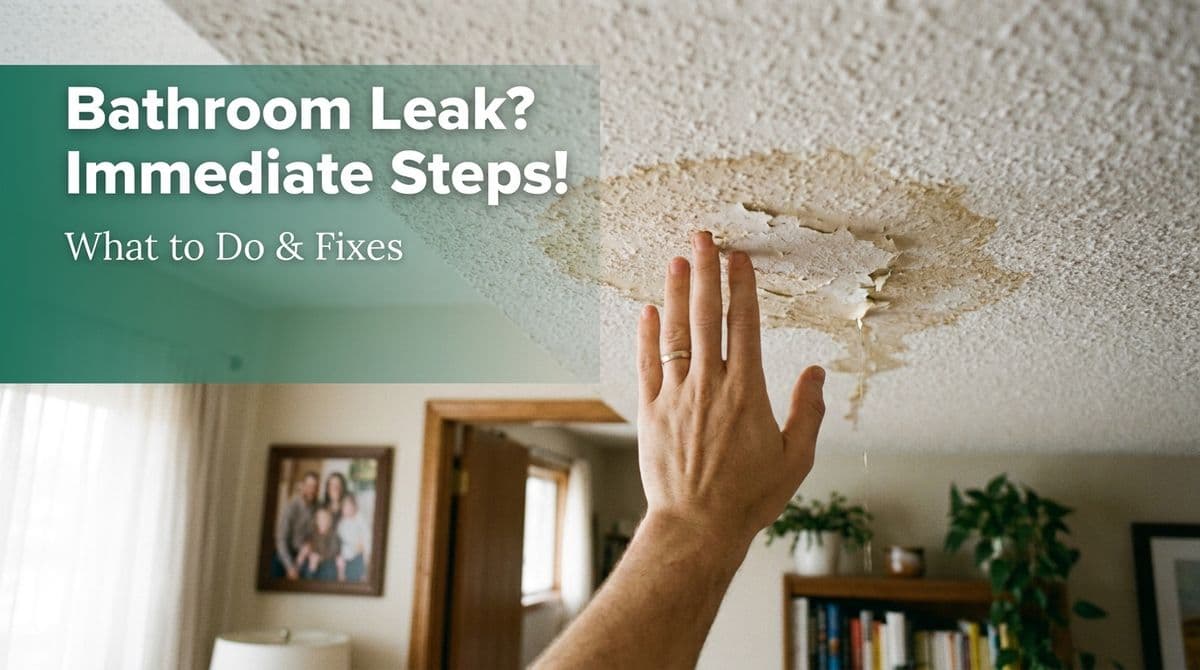
When Your Upstairs Bathroom Starts Dripping Into the Kitchen
We recently got a call from a customer — let’s call him Mark — who was having one of those “drop everything” plumbing emergencies. He told us he’d heard a strange rushing noise when he used his upstairs bathroom sink and tub the night before. By morning, he noticed the wood in his downstairs kitchen ceiling looked wet… and then he saw it: water actually dripping through the ceiling.
Mark was worried about all the wood in his home getting damaged (rightfully so), and he wasn’t sure if a pipe had burst, if the tub drain was leaking, or if something else was going on. While we got him on the schedule, we walked him through some immediate steps to protect his home before we arrived.
If you’re ever in Mark’s shoes — upstairs bathroom leaking into the ceiling below — here’s exactly what we recommend you do, both right now and for a long-term fix.
Step One: Stop the Water Before It Spreads
On the phone, the first thing we asked Mark was whether the drip was constant or only when he used the fixtures. His was a “pretty constant drip,” which usually means there’s a pressurized supply-line issue (or a steady leak somewhere in the system), not just a splash from a shower or a loose caulk line.
The very first priority in a situation like this is to limit the damage:
- Shut off water to the house if you can. We asked Mark if he knew where his main shutoff was. Fortunately, he did. Turning off the main stops fresh water from feeding the leak.
- Use water only as needed. If you must turn it back on (for a quick flush, hand washing, etc.), do it briefly, then shut it off again. This is exactly what we had Mark do.
- Shut off individual fixtures if possible. Under most sinks and toilets, you’ll see small shutoff valves. Turn those clockwise to stop water to that fixture alone.
Every minute that water is not pouring into your ceiling is a win. The sooner you stop it, the more of your drywall, insulation, and framing you can save.
Step Two: Protect the Area Below the Leak
Mark’s leak showed up in the kitchen ceiling under his upstairs bath. Until we could get there, we had him do a quick “damage control” setup:
- Move anything valuable or sensitive out of the area under the drip: electronics, wood furniture, rugs, and anything sentimental.
- Set up a bucket or large container directly under the drip to catch water.
- Lay down old towels or a plastic sheet on the floor to protect flooring from splashes and minor overflows.
If the ceiling is visibly bulging and you’re comfortable doing so, you can gently poke a small hole in the lowest point of the bulge with a screwdriver or nail to let water drain into a bucket in a controlled way. Otherwise, a water-filled bubble can suddenly burst and make a much bigger mess. If you’re unsure or uncomfortable, wait for a professional — your safety comes first.
Step Three: Try to Narrow Down the Source (Without Making It Worse)
While we were talking with Mark, he mentioned that the strange noise in the walls happened when they used the sink and tub. That clue helped us think through possible causes before we even arrived.
Here are some common sources of an upstairs bathroom leak into the room below:
- Toilet leaks: from the supply line, tank bolts, or a failing wax ring under the toilet.
- Sink leaks: loose drain connections, cracked P-trap, leaking faucet connections.
- Tub or shower leaks: bad caulk, failed drain gasket, cracked tub, or leaking shower valve in the wall.
- Hidden pipe leaks: a pressurized hot or cold water line in the wall or floor that has cracked or loosened.
If it’s safe to test, you can do a little detective work:
- Turn the water back on briefly and run only the sink for a few seconds. Watch the ceiling below for increased dripping.
- Do the same with the toilet flush and, if possible, a quick shower or tub fill.
If any one fixture clearly makes the leak worse, shut everything down again and tell your plumber what you observed. With Mark, that connection between the noise and using the sink/tub gave us a strong hint that the issue was related to the bathroom’s drain or supply system, not just random condensation.
Short-Term vs. Long-Term Fixes
In an emergency call like Mark’s, homeowners often ask, “Can I just patch it and be done?” The honest answer: you can sometimes temporarily slow or stop the visible leak, but you still need a proper repair to avoid mold, rot, and repeat problems.
Short-Term Measures
These can help stabilize things until a plumber arrives, but they are rarely permanent solutions:
- Tightening visible connections under a sink or at a toilet supply line (if you can easily access them and see water).
- Shutting off just the problem fixture (for example, leaving the upstairs bathroom off-limits but using the rest of the house).
- Drying surfaces quickly with fans and towels to minimize water sitting on wood and drywall.
We don’t recommend relying on tape, sealants, or “miracle” leak-stop products as a permanent fix in hidden plumbing. They usually just hide the problem until it becomes bigger and more expensive.
Long-Term, Professional Repairs
A real fix depends on what we find once we open things up. For leaks like Mark’s, long-term repairs often include:
- Replacing damaged sections of pipe (supply or drain) rather than trying to patch them.
- Resetting or repairing toilets, sinks, or tubs with new seals, wax rings, or gaskets.
- Properly re-caulking and waterproofing around the tub or shower.
- Drying or replacing wet insulation and drywall so you don’t trap moisture in your ceiling or walls.
A good plumber won’t just stop the drip; they’ll look for hidden moisture and recommend what needs to be opened, dried, or replaced so your home doesn’t develop mold or structural issues later.
When to Call a Plumber (Hint: Sooner Is Better)
If water is already dripping through your ceiling, that’s not a “wait and see” situation. Like Mark, you should call as soon as you notice:
- Unexplained dripping or staining on the ceiling below a bathroom.
- Bulging paint or soft spots in the ceiling.
- New, unusual sounds in the walls when you run water.
While you’re waiting for us (or your local plumber) to arrive, follow the same steps we gave Mark: shut off the water, protect the area below, and avoid using the suspected bathroom as much as possible.
If your upstairs bathroom is leaking into the room below and you’re not sure where to start, give us a call. We’ll talk you through the immediate steps over the phone and then get out there to track down the source, fix the leak, and help you get your ceiling and bathroom back to normal.