Why Water Heater Straps Matter Before a Home Inspection
Home inspector flagged “no strap on the water heater”? Here’s why seismic strapping matters, what code expects, and how sellers can fix it before closing.
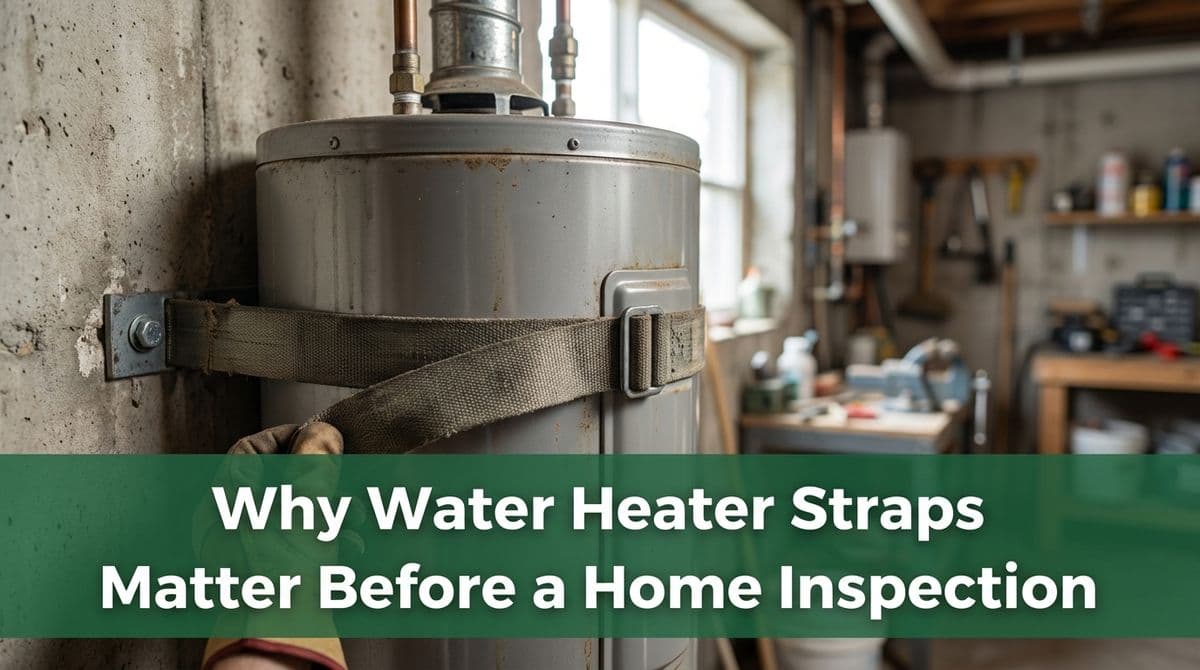
“They Said There’s No Strap on the Water Heater…”
We recently got a call from a homeowner — let’s call him Mark — who was right in the middle of selling his house. The buyers had just done their home inspection, and the inspector flagged something that caught Mark totally off guard:
“They said there’s no strap on the water heater. We’ve had it for years and nobody’s ever mentioned that. Now they want it fixed before closing.”
Mark thought everything was in good shape. The water heater was fairly new, working fine, and had been installed by a professional. But the inspector was absolutely right: there were no seismic straps on the tank at all, and that’s a big red flag for both safety and code compliance.
We coordinated with his real estate agent, scheduled a time to get access to the house, and got the heater properly strapped and documented for the buyers. On our end it was a fairly simple visit — but for Mark, it was the difference between a smooth closing and a last-minute scramble.
Why Water Heater Straps Matter More Than Most People Realize
A lot of homeowners are like Mark: they’ve never really thought about whether their water heater is strapped, or if the existing strapping is actually done correctly.
Here’s why it matters:
- Safety in earthquakes: In many areas, especially seismic zones, a water heater is required to be secured so it can’t tip over during an earthquake. A falling tank can rip gas lines, break water lines, and cause major flooding or even fires.
- Protecting gas and water lines: Even a minor impact can stress fittings. A loose tank can turn a small shake or bump into a major leak.
- Code compliance: Local plumbing and building codes often require water heater strapping for both new installs and existing homes being sold.
- Insurance concerns: After a quake or accident, insurance companies may look at whether equipment was installed to code. Missing straps might complicate a claim.
So when an inspector writes “no strap whatsoever” on a report, it’s not just nitpicking — they’re calling out a real safety issue and a code violation.
What Most Home Sellers Don’t Know (Until the Inspection)
Mark’s situation is extremely common. Sellers often learn about water heater strap requirements only when:
- The buyer’s home inspector flags it
- The buyer’s lender or insurance requires it
- A city or county inspector comes out for a resale inspection
By that point, you’re usually up against deadlines: repair requests, loan approval timelines, and closing dates. The good news is that strapping a water heater correctly is usually quick and affordable — but it has to be done the right way.
Basic Code Expectations for Water Heater Straps
Every city and state has its own specific code language, but most seismic areas follow similar principles. In general, inspectors are looking for:
- Two straps minimum: One near the upper third of the tank, and one near the lower third.
- Proper materials: Heavy-gauge metal straps or approved seismic kits — not rope, wire, or bungee cords.
- Anchored into framing: Straps should be secured to wall studs or blocking, not just thin drywall or paneling.
- Correct tension: Straps should be snug but not crushing insulation or fittings.
- Full tank secured: The entire tank should be restrained from tipping or sliding, not just “sort of held in place.”
On Mark’s inspection report, the note was simple: “Water heater lacks required seismic strapping. Recommend correction by a qualified professional.” That’s enough for most buyers (and their agents) to request repairs before closing.
DIY vs. Hiring a Pro: What You Can Safely Do
If you’re handy, you might be tempted to run to the hardware store, grab a kit, and install the straps yourself. For some homeowners, that’s possible — but there are a few things to keep in mind:
- Access and framing: You need to be able to find solid structure (studs or blocking) to anchor into. In tight closets or finished garages, that can be tricky.
- Clearances: The heater still needs safe clearances from walls, vent pipes, and gas lines. Straps shouldn’t create new hazards.
- Documentation: Buyers and inspectors often prefer a licensed plumber’s invoice or photo documentation as proof it’s been corrected properly.
When we came out for Mark, we didn’t just “throw a strap on it.” We inspected how the heater was set, checked gas and water connections, selected the right hardware for his wall construction, and then provided documentation his agent could share with the buyers.
How to Avoid Last-Minute Surprises Before You List
If you’re planning to sell soon, you can save yourself some stress by checking a few things before the sign goes in the yard:
- Look at your water heater: Do you see two sturdy metal straps, one high and one low, actually anchored into the wall?
- Check for DIY-looking fixes: Old plumber’s tape, wire, or a single strap loosely wrapped around the tank won’t pass in many areas.
- Ask your agent: Local realtors see inspection reports every day and usually know what inspectors in your area are strict about.
- Schedule a quick plumbing safety check: A short visit from a licensed plumber can catch strap issues — and other common inspection items — before the buyer’s inspector ever shows up.
That way, instead of having to scramble mid-escrow like Mark did, you can handle everything on your own timeline.
What We Do When We’re Called for Strap Issues
When a homeowner or agent calls us about a missing or inadequate water heater strap, here’s our typical process:
- Coordinate access: We often work directly with the listing agent if the home is vacant or the sellers are out of town.
- Evaluate the setup: We confirm tank size, location, wall type, and existing supports so we use the right hardware.
- Install code-compliant strapping: We place and anchor the straps correctly, and check that everything else around the heater is safe and functional.
- Provide documentation: We can give an invoice and photos so your agent can show the buyers and their inspector that the issue was properly corrected.
For most standard residential heaters, the visit is fast, the cost is reasonable, and the peace of mind — especially during a home sale — is huge.
Thinking About Selling? Don’t Forget the Water Heater
Mark’s sale moved forward smoothly once we got his tank properly strapped, but it easily could’ve delayed closing if it had been ignored. If you’re getting ready to list, or if your inspection report already mentions water heater strapping, it’s worth taking care of it sooner rather than later.
Whether you’re staying put and just want to be safer, or you’re in the middle of a sale and need a quick, code-compliant fix, we’re always happy to take a look and make sure your water heater is strapped the way it should be.