Is Your Water Heater Totaled? Signs It Must Be Replaced
Wondering if your water heater is truly “totaled”? Learn how to tell when replacement is your safest bet and what a proper, code-compliant install should include.
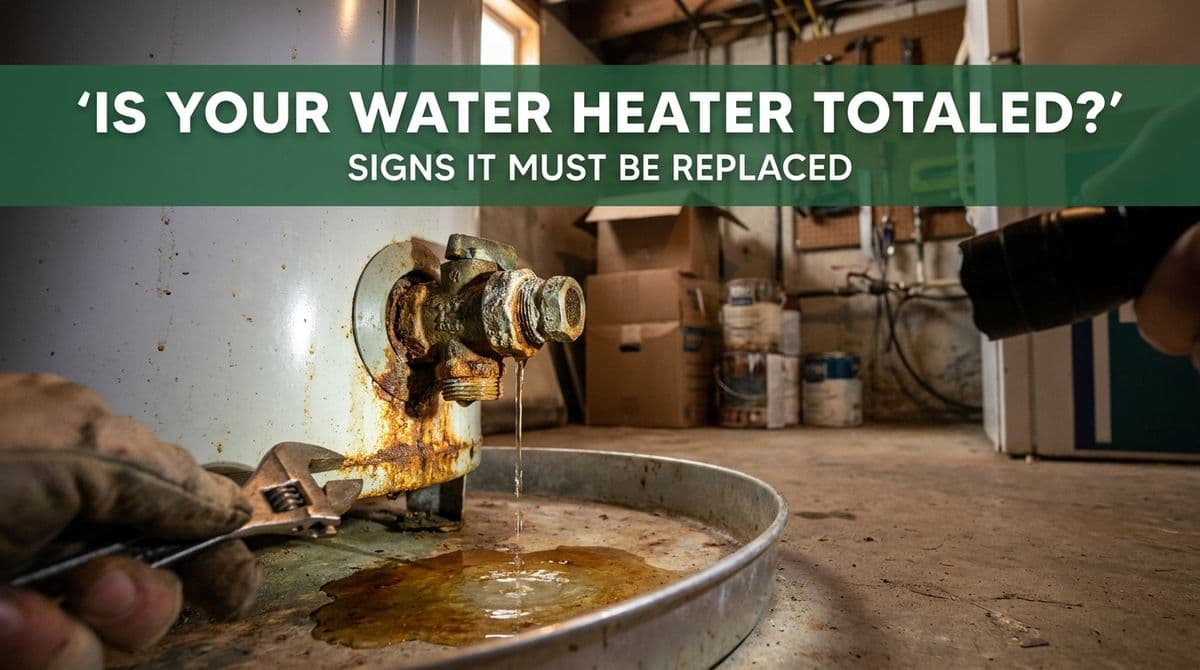
“The Gas Company Said My Water Heater Is ‘Totaled’…”
We recently got a call from a customer — let’s call him Mike — who had just come home from a long hospital stay. On top of everything he’d been through, he walked into a house with no hot water.
Mike had already had the gas company out, and the tech took one quick look at the tank and told him, “Your water heater is totaled.” There was a crack and signs of failure, but Mike wasn’t sure what that really meant. Was it truly done for, or could it be repaired? And if it did need to be replaced, what should a proper replacement actually include?
We walked Mike through all of that over the phone, and we want to share that same guidance here, so you can make a clear decision if someone ever tells you your water heater is “totaled.”
What “Totaled” Really Means for a Water Heater
When a tech says a water heater is “totaled,” they usually mean one big thing: the unit is no longer safe or economical to repair. Common reasons include:
- Tank cracks or leaks – If the tank itself is split or rusted through, there’s no reliable repair. Patches and sealants are temporary at best and unsafe at worst.
- Severe corrosion – Rust around the bottom of the tank, on the seams, or at multiple fittings often means the metal has thinned and can fail suddenly.
- Repeated shutoffs – If the gas company keeps tagging the unit or shutting it down for safety, that’s a strong sign replacement is the right move.
- Age plus major issues – A 10–15+ year-old heater with a big problem typically isn’t worth the cost of a major repair.
In Mike’s case, there was a crack and visible damage. From what he described and what the gas company noted, we knew we’d be talking about a full replacement, not a patch job.
Repair vs. Replace: How We Help Homeowners Decide
We never want to rush anyone into a big purchase, especially when they’re already dealing with medical bills or other stresses. So when we talk about repair vs. replacement, we walk through a few key questions with you:
- How old is the heater? Under 8 years with a minor issue? Often repair is reasonable. Over 10–12 years with a major issue? Replacement usually wins.
- What’s the cost of the repair? A simple part and quick labor might run $200–$400. If repairs start creeping toward half the price of a new unit, replacement becomes the smarter long-term choice.
- How reliable has it been? One small problem in a decade is different from calling for help every few months.
- Any safety tags or red tags? If the gas company or inspector has shut it down, we take that very seriously.
With Mike, the combination of age, a cracked tank, and safety concerns made the decision pretty clear: replacement was the only safe option.
What a Proper Water Heater Replacement Should Include
On our call, Mike’s next big question was price. We walked him through our standard replacement package so he knew exactly what he’d be getting for the estimate we provided.
When we supply and install a water heater, we don’t just drop in a new tank and call it a day. A proper replacement typically includes:
- New water heater sized correctly for your home and usage
- New shutoff (ball) valve on the water line so you can easily isolate the heater
- Gas drip leg (sediment trap) to protect the burner from debris in the gas line
- New water supply lines (flex connectors or hard-pipe, as appropriate)
- New gas flex connector with proper fittings and sizing
- Upgraded venting if needed to meet current code
- Proper expansion tank where required by local code
- New T&P (temperature & pressure) relief valve piping run to a safe discharge location
- Full start-up and safety check to confirm proper operation and draft
From what Mike told us — a basement heater with good outside access and a pretty standard setup — we could give him a straightforward estimate for us to supply and install the whole system. Access and complexity can change the cost, but for a standard replacement, we’re able to quote a clear price over the phone just like we did for him.
Quick Checklist: Is Your Water Heater Likely “Totaled”?
If you’re staring at a struggling heater and wondering where you stand, here’s a simple checklist to run through before you call:
- You see active leaking from the tank body (not just a loose fitting).
- There’s visible rust and corrosion eating through the metal at the bottom.
- The gas or utility company has tagged or shut off the unit for safety.
- The unit is 10–15+ years old (check the label for manufacture date).
- You hear loud popping, rumbling, or banging every time it runs.
- You frequently run out of hot water and it takes forever to recover.
If you’re checking several of these boxes, there’s a good chance you’re looking at replacement. We’re always happy to talk through what you’re seeing and give you an honest opinion before we schedule anything.
Basic Maintenance to Help Yours Last Longer
While some failures are unavoidable with age, a little maintenance can stretch the life of a water heater and help you avoid that “totaled” verdict for as long as possible:
- Flush the tank annually to reduce sediment buildup, especially if you have hard water.
- Test the T&P valve once a year to confirm it opens and closes properly.
- Inspect for leaks and rust around the base and fittings every few months.
- Keep the area around the heater clear so we can spot problems early and maintain good combustion air.
- For gas units, glance at the flame occasionally — it should be mostly blue, not yellow and sooty.
None of this replaces professional service, but it can buy you extra years and give you a heads-up before a small issue becomes a big emergency.
Need Help Deciding? We’re Here to Talk It Through
When Mike called, he was juggling medical bills, a cold house, and a big, unexpected expense. Our job wasn’t just to quote a number — it was to explain why his heater was considered “totaled,” what a proper replacement included, and how quickly we could get him back to hot showers.
If you’ve been told your water heater is totaled and you’re not sure what to do next, reach out. We’ll walk you through what we’d look for, give you a clear, upfront estimate for a complete, code-compliant replacement, and help you choose the timing that works for your budget and your schedule.
Hot water isn’t a luxury — it’s part of a safe, comfortable home. When yours fails, we’re ready to help you get it back the right way.