Why Your Kitchen Sink Keeps Clogging Every Few Years
Kitchen sink clogging every few years? Learn why it keeps happening, what plumbers actually do to fix it, and how to keep your drain clear longer.
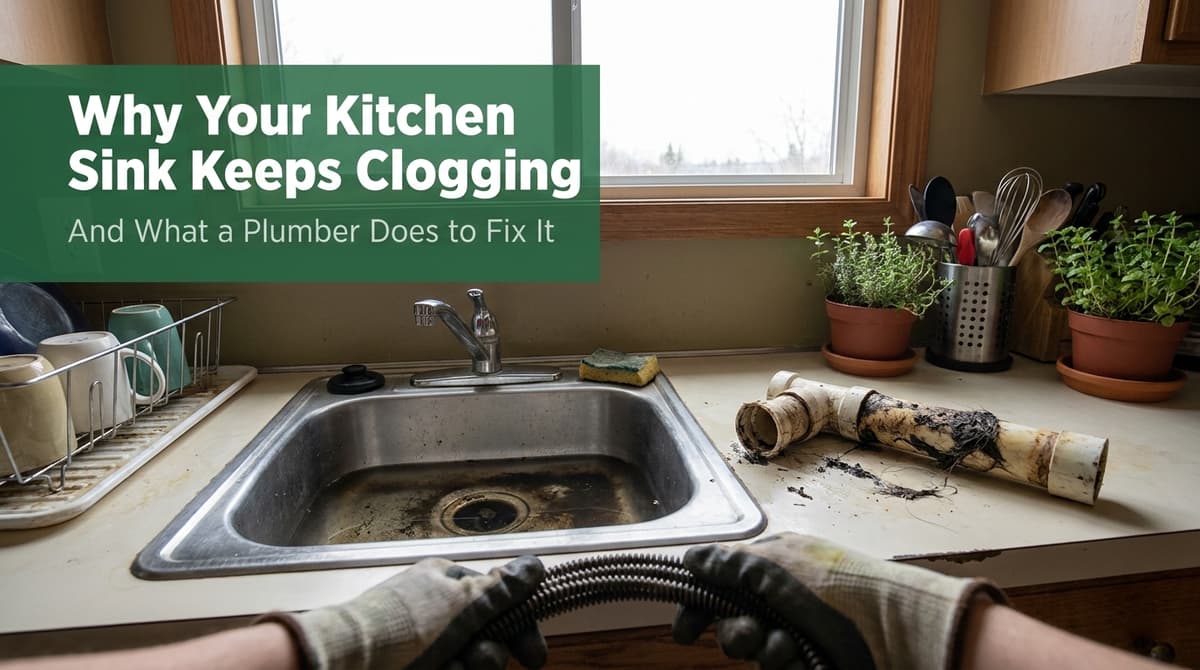
Why Does My Kitchen Sink Clog Every Few Years?
We recently got a call from a customer — let’s call him Mike — who was at his wits’ end with a slow kitchen sink. The water would eventually go down, but it was taking forever, and he told us, “This has happened a few times over the years. I snake it, it’s good for like three or four years, and then it starts all over again.”
Mike’s story is something we hear a lot: the sink seems fine most of the time, then every few years it slows to a crawl, someone runs a snake, it clears up… and then the cycle repeats. This time, he wanted to know why it kept happening and what a professional plumber does differently.
On Mike’s home, his friend had tried snaking from a kitchen cleanout and couldn’t get to the blockage. They ended up using a cleanout near a bathroom to finally clear the line. That detail told us a lot about how his plumbing was laid out — and why his clogs kept coming back.
The Real Reason Kitchen Drains Keep Clogging
A kitchen sink that clogs every few years usually isn’t a “bad luck” problem. It’s almost always a combination of:
- What goes down the drain (grease, food, soap scum)
- How the pipes are run in the walls or under the slab
- How far the blockage is from the kitchen and where we’re able to access it
In Mike’s case, the fact that a big snake couldn’t reach the clog from the kitchen cleanout, but could from a bathroom cleanout, suggested his kitchen ties into a larger drain line further downstream. So the symptoms show up at the kitchen sink, but the real blockage can be several feet away — sometimes a full room away.
What Builds Up Inside Kitchen Pipes
Even if you’re careful, a kitchen sink sees a lot of things your other drains don’t:
- Fats, oils, and grease that cool and harden on the pipe walls
- Fine food particles that stick to that greasy coating
- Soap and detergent residue that act like glue
Over time, this creates a kind of sticky “plaque” inside the pipe. You may not notice anything for a year or two. Then the opening gets smaller and smaller until normal daily use is enough to push it over the edge and you suddenly have a slow or backed-up sink.
Why Snaking From the Kitchen Doesn’t Always Work
Mike mentioned that his buddy had used a big drain snake from the cleanout right behind the kitchen sink and “put the snake all the way down,” but they still couldn’t reach the clog. That’s a common situation.
Here’s what can be going on when that happens:
- Pipe layout: The kitchen branch line may run a long way before it meets a larger main line, sometimes with multiple turns.
- Multiple cleanouts: A cleanout in another room (like Mike’s bathroom) may be closer to the actual blockage.
- Snake limitations: Not all snakes are created equal. Length, cable size, and the type of head all matter.
So from your point of view, it feels like, “We snaked it, why is it back again in three years?” But from our perspective, maybe only part of the line was really cleaned, or the snake never fully broke through the main buildup.
What a Plumber Actually Does to Fix a Recurring Kitchen Clog
When we show up to a house like Mike’s, we don’t just immediately shove a snake down the nearest opening. We run through a simple process to make sure we’re fixing the right problem.
1. Identify the Best Access Point
First, we figure out where your kitchen ties into the rest of your plumbing. That might be:
- A cleanout right behind or under the kitchen sink
- A cleanout outside on the exterior wall
- A cleanout in another room (like Mike’s bathroom) that connects to the same line
We’ll choose the access that gives us the straightest, most effective shot at the blockage — even if that means working from a room that doesn’t seem related to the kitchen at first glance.
2. Use the Right Equipment
For a kitchen line, we might use:
- Medium-duty cable machine with the right size head to scrape the pipe walls
- Larger mainline machine if the clog is deep in the home’s main drain
- Hydro jetting (high-pressure water) for stubborn, greasy buildup that keeps returning
The goal isn’t just to poke a hole in the clog so water drains today; it’s to clear as much buildup as possible so you’re not calling us again in a year or two for the same drain.
3. Check for Bigger Issues
If the drain has a history of recurring problems, we may recommend a camera inspection. That lets us see:
- Low spots where water and grease collect
- Pipe sagging, cracks, or partial collapses
- Improper slope or too many tight turns
Sometimes the recurring clog is a symptom of an underlying design or pipe condition issue. In those cases, we’ll walk you through options to fix it long term instead of just “band-aiding” it every few years.
How to Make Your Kitchen Drain Last Longer Between Clogs
You can’t change how your pipes were originally run without a remodel, but you can change what goes in them and how you maintain them. Here are a few habits we recommend to customers like Mike:
- Keep grease out of the sink. Wipe greasy pans with a paper towel and toss it in the trash. Pour cooled oil into a container and throw it away.
- Use strainers. A simple mesh strainer in the sink can catch a surprising amount of food debris.
- Run hot water for a minute after doing dishes to help move residual soap and grease along.
- Avoid harsh chemical drain cleaners. They can damage pipes and usually don’t fix the underlying buildup.
- Consider periodic professional cleaning if you know your kitchen line has a history of issues.
When to Call a Plumber About Your Kitchen Sink
If your kitchen sink is suddenly slow, especially if this isn’t the first time in a few years, it’s a good idea to have a pro take a look. When we come out, we’re not just there to “snake and go” — we’re looking at where the clog is, how your lines are laid out, and what it’ll take to keep that drain flowing for as long as possible.
If you’re noticing that familiar slow swirl in your kitchen sink again, don’t wait until it’s completely blocked. A proper diagnosis and thorough cleaning now can save you from messy backups and repeat visits down the road.